10 Indian Horror Stories That Will Keep You Awake All Night
Raat ke baara baj rahe hain. The ceiling fan hums. You pull the blanket a little tighter — not because it’s cold, but because something about the silence tonight feels… wrong. If you’re reading this alone, in the dark, you might want to reconsider. These aren’t made-up tales. These are stories passed down from grandmothers in dimly lit kitchens, from fishermen in Bengal’s misty swamps, from villagers who swear — swear on their lives — that they saw something that night.
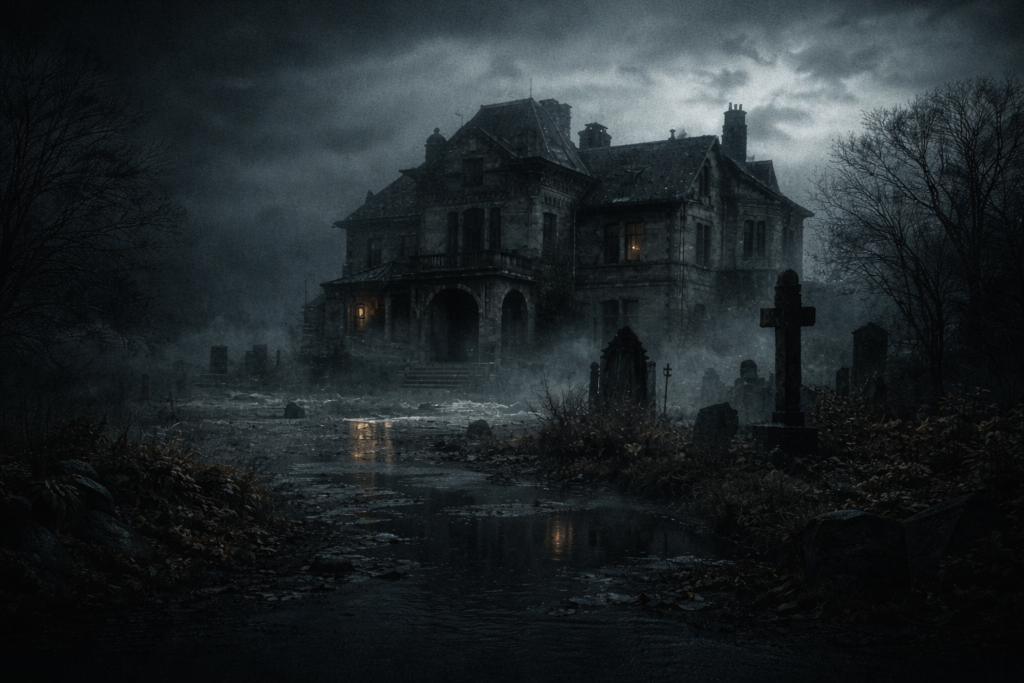
Welcome. The door is already open.
What Makes Indian Horror Stories So Uniquely Terrifying?
Before we dive into the stories, understand this — Indian horror isn’t just jump scares and haunted houses. It is woven into the soil itself. Every river, every banyan tree, every abandoned fort carries a story older than your great-grandfather. Indian horror has roots in mythology, in injustice, in the grief of women wronged and the rage of souls unburied. It doesn’t just scare you. It stays with you.
1. The Nishi Dak — When Your Mother’s Voice Calls You Into the Dark
Imagine lying in bed in a village in Bengal. It’s 2 AM. And then — you hear it. Your mother’s voice, calling your name from outside. Soft. Familiar. Warm.
But your mother is asleep right next to you.
This is the Nishi Dak — The Call of the Dark. This evil spirit mimics the voice of your most beloved person and calls you outside into the night. It can only call your name twice. If you step out, it leads you to a deserted place and reveals its true horrifying form before taking your life.
The rule passed down through generations in Bengal is simple: Never respond to your name being called at night if you don’t see the person with your own eyes. A rule that, once you’ve heard this story, you will never forget.
2. Bhangarh Fort — The Curse That Still Breathes
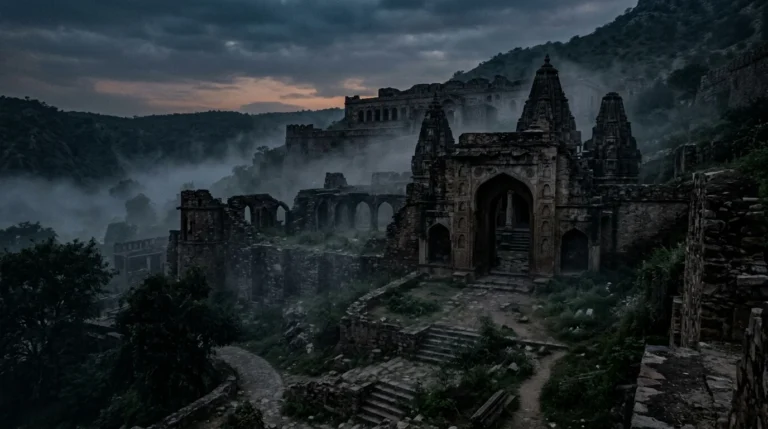
Rajasthan. Your home state. And somewhere in its golden desert dust lies Bhangarh Fort — officially the most haunted place in India, so dangerous that the Archaeological Survey of India has banned entry after sunset.
The legend? A black magic sorcerer named Singhiya fell in love with the princess of Bhangarh. When she rejected him, he cursed the entire kingdom to ruin — trapping every soul within those walls for eternity.
Visitors report hearing footsteps in empty corridors. Cameras that refuse to work. An overwhelming feeling of being watched. Local villagers don’t go near after dark. And those who have? They don’t talk about it easily.
3. Kuldhara — The Village That Cursed Itself Into Silence
Near Jaisalmer — again, your Rajasthan — lies Kuldhara. A prosperous village that one night, simply… emptied. Every single one of its 1,500 Paliwal Brahmin residents vanished overnight, leaving behind pots still on the fire, clothes still hanging, futures still half-lived.
They didn’t flee. They cursed the land before leaving, declaring that no one would ever live here again in peace. The 2010 film Kaalo drew loose inspiration from this very place.
Paranormal investigators have reported strange energy readings, whispering sounds at dusk, and an inexplicable heaviness that settles on your chest the moment you enter. The Indian Paranormal Society documented their investigation here. They left before morning.
4. Yakshi — The Beautiful Woman Atop the Palm Tree
Kerala, late night. A lone man walks a quiet road lined with tall palm trees. He notices a woman — breathtakingly beautiful, dressed in white — sitting high up in the tree, smiling down at him.
He smiles back.
That is his last mistake.
The Yakshi is one of Kerala’s most feared entities — the spirit of a woman who died a violent, unjust death. She lures men with her beauty, draws them close, and drinks their blood. Kerala folklore is rich with Yakshi tales, and even today, old palm trees in certain villages are marked with sacred symbols to keep her bound.
5. Aleya — The Ghost Lights of Bengal’s Swamps
West Bengal’s Sundarbans at night is already terrifying — mangrove roots like twisted fingers, water that reflects nothing, the distant cry of something you cannot name. But locals fear one thing above all: the Aleya lights.
These are ghostly, floating orbs that drift across the swamp surface. They are said to be the spirits of fishermen who drowned — now leading other fishermen off safe paths and into the murky deep.
Science calls them marsh gas. The fishermen call them something else. And the ones who have followed the lights? They were never found.
6. Nale Ba — The Witch Who Knocks at 3 AM
In parts of Bengaluru, in the late 1990s, an entire city was gripped by one rule: Do not open your door at night.
The Nale Ba — a witch who walks the streets, knocking on doors in the dead of night. If you open the door, you die. The only protection? Writing “Nale Ba” (Come Tomorrow) on your front door, which gives you exactly one day’s reprieve.
This wasn’t just folklore — it became a mass cultural phenomenon. People across Bengaluru wrote the words on their doors. Some areas still observe Nale Ba Day on April 1st. When an entire modern city refuses to open its doors at night, you know the story has teeth.
7. Pishach — The Demon That Eats Your Mind First
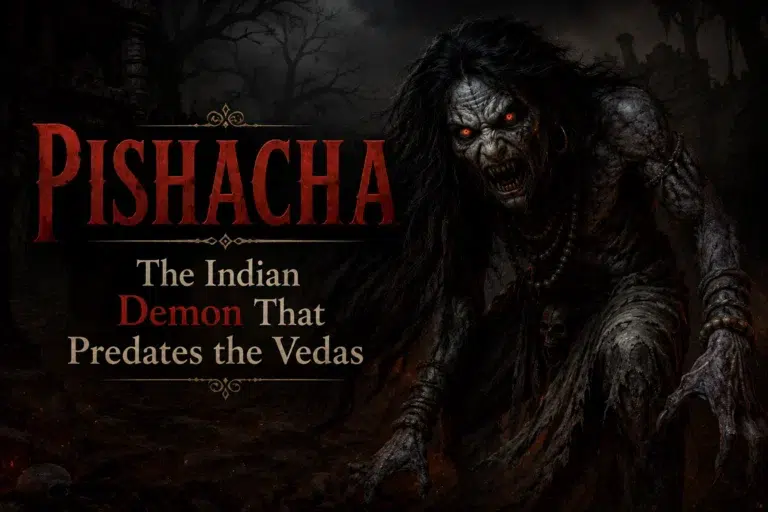
The Pishach is older than most horror you’ve ever encountered. Rooted in Hindu mythology, it is a flesh-eating demon that lurks in graveyards and places of death and rot. But what makes it truly terrifying is this — it doesn’t just attack the body. It possesses the mind first, driving the victim to complete insanity before it takes them.
The 2023 Hollywood film It Lives Inside was built entirely around the Pishach, bringing this ancient Indian demon to global audiences. But no film can capture the real terror of the original folklore — the idea that something could crawl inside your skull and make you want to destroy yourself.
8. Boba — The Thing That Sits on Your Chest at Night
You’ve woken up unable to move. Unable to scream. A crushing weight on your chest, a shadow at the edge of your vision. Science calls it sleep paralysis. Bengal calls it the Boba.
The Boba specifically targets people sleeping on their backs, strangling them slowly, deliberately, in the dark. It is patient. It enjoys the process.
The next time you wake up frozen at 3 AM, unable to move or scream — remember. Maybe it’s just sleep paralysis. Maybe.
9. Mohini — The Ghost with Legs of Fire
Deep in the forests and old wells of South India dwells Mohini — not the divine enchantress of mythology, but something far darker. She is the spirit of a woman who died without ever knowing love, and she carries that longing like a wound that never closed.
Her presence is announced by an impossibly beautiful fragrance — sweet, intoxicating, wrong. Those who follow the scent find her: a woman with a face of heartbreaking beauty and legs that burn with fire.
Couples are her favourite targets. She does not forgive what she was denied.
10. Muhnochwa — The Face Scratcher of Kanpur
This one isn’t ancient folklore. This happened in 2002, in Kanpur, Uttar Pradesh. A creature — described as glowing, metallic, insect-like — began attacking people in the night, scratching their faces violently, leaving deep marks and, in several cases, killing its victims.
Seven people died. Dozens were injured. The city panicked. Police set up night patrols. Politicians demanded investigations. Scientists offered explanations nobody believed.
The attacks stopped as suddenly as they started. No creature was ever caught. No explanation was ever officially accepted. The Muhnochwa remains one of the most disturbing and real mass horror events in modern Indian history — because unlike a ghost story told by a grandmother, this one has police reports attached to it.
Why These Stories Matter
India’s horror is not entertainment. It is cultural memory — stories that encode real fears, real injustices, real warnings. The Yakshi is the rage of women wronged. The Pishach is the fear of losing your mind. The Aleya lights are the grief of forgotten deaths. Every story is a mirror held up to something true.
Ab darwaaza band kar lo. Turn on a light. And if you hear your name being called from outside tonight — don’t answer. Not even once.
Frequently Asked Questions (FAQ)
Q: Are these Indian horror stories real?
Many, like the Muhnochwa attacks and Kuldhara abandonment, are documented historical events. Others are deeply rooted regional folklore passed down for centuries.
Q: Which is the most haunted place in India?
Bhangarh Fort in Rajasthan is officially recognized as India’s most haunted location, with government-mandated restrictions on entry after dark.
Q: What is the scariest Indian ghost?
The Nishi Dak is widely considered one of the most psychologically terrifying — because it uses your loved one’s voice as its weapon.
Q: Where can I read more Indian horror folklore?
Look into regional collections like Thakumar Jhuli (Bengali folk tales) and the book Ghosts, Monsters and Demons of India for deep dives into regional horror traditions.