Real Indian Horror Stories From Villages That Will Make You Fear the Dark
Raat ke andhere mein, jab gaon ki bijli chali jaati hai — tab asli dar shuru hota hai.
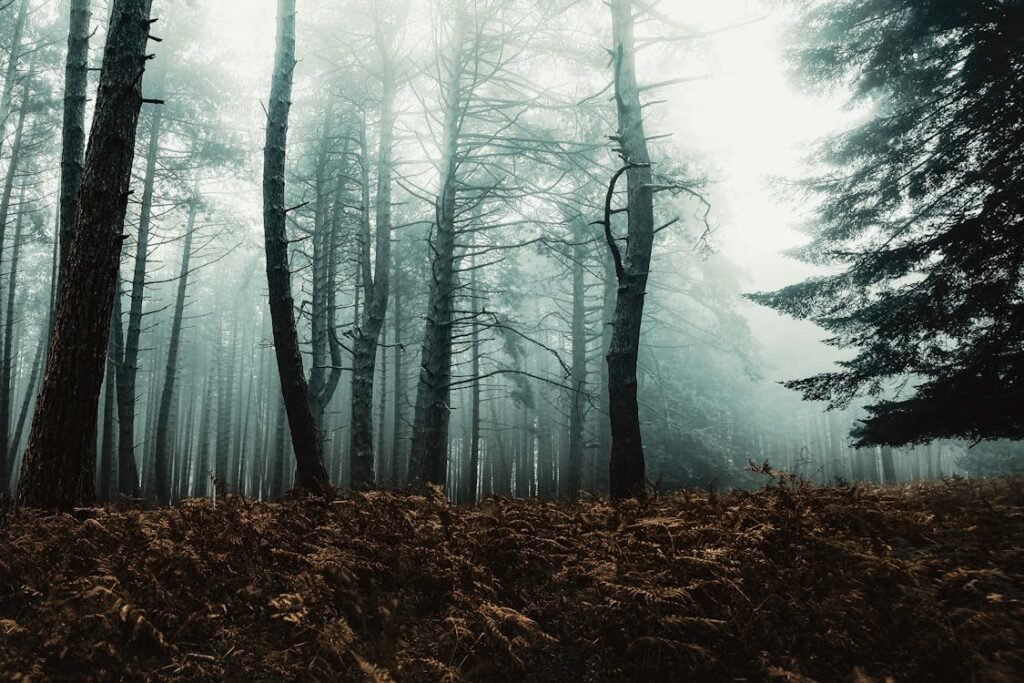
You know the kind of night. No streetlights. The charpai creaks outside. A dog starts howling in the distance — one long, mournful howl that cuts through the silence like a knife. Your nani pulls the dupatta tighter over her head and lowers her voice. “Yahan kuch hai,” she whispers. “Something is here.”
City people call it superstition. But the people who live in India’s villages — the farmers, the shepherds, the women who draw water from old wells at dusk — they know better. They have seen things. They have heard things. And the stories they carry are not from books. They are from lived, breathing, terrifying experience.
These are those stories.
The Rudali Who Never Stopped Crying — Rajasthan
In the villages of Rajasthan, there was once a tradition of Rudalis — professional mourners, women paid to weep loudly at the funerals of upper-caste men whose own families couldn’t publicly grieve. A life spent crying for others’ dead.
One such Rudali was Leelawati.
During the British era, she was kicked violently by a colonial officer as she wept during a funeral procession. She died from her injuries — alone, on the same dusty road where she had cried a thousand times for others. No one mourned her. No one wept.
But that wasn’t the end of Leelawati.
Till this day, villagers in that region swear — swear — that on nights when someone dies in the village, they hear a sound before the family has even begun to grieve. A woman’s voice, crying, beating her chest, wailing through the mud-packed lanes of the village. By morning, she is gone. But the death is always real.
Leelawati is still working. Unpaid. Unburied. Unforgiven.
The Chain Tree of Wayanad — Kerala’s Most Dangerous Road
Deep in the Wayanad Ghats of Kerala, there is a tree unlike any other. It is wrapped in chains — heavy, iron chains, bolted and locked. Not to keep animals out. But to keep something in.
The story goes back centuries. A tribal leader named Karinthandan helped British surveyors navigate the dangerous mountain passes of Wayanad. He guided them faithfully through the forests. And when his usefulness was over, the British officers repaid him with betrayal — they killed him and left his body at the foot of a great tree.
His spirit, furious and unmoored, began luring travellers off the road and into the ravines below. Accidents on that stretch became too frequent, too deliberate to ignore. A local temple priest eventually performed rituals and bound Karinthandan’s spirit to the tree — wrapped it in chains to hold it in place.
The chains are still there. Maintained. Replaced when they rust. Locals treat the tree with deep respect — offerings of flowers and incense left at its base. Because everyone in Wayanad knows: you don’t mock the Chain Tree. The road below the Ghats is unforgiving enough without angering what’s bound to that trunk.
The Lakkad Sunghwa — UP and Bihar’s Child-Stealing Shadow
If you grew up in Uttar Pradesh or Bihar, your mother warned you about this one.
A young boy is walking down a dusty village lane. A stranger approaches — friendly, harmless-looking. He offers the boy something interesting. But first, he asks the child to smell a piece of wood. Just smell it. “Dekho, yeh kya hai?”
The child leans in.
And then — nothing. The child is gone.
The Lakkad Sunghwa is a kidnapping spirit of village folklore, described as an entity or tantric-possessed human who uses enchanted wood to render children unconscious and steal them away — never to return. In village after village across eastern UP and Bihar, generations of mothers have used this story to keep children from talking to strangers after sunset.
But here’s the part that should send a chill down your spine: multiple real-life disappearances of children in isolated villages across these regions have never been explained. No suspect. No body. No answer.
Sometimes, the old stories exist because the old things are still happening.
Bemni Village — The Most Haunted Village in India (Uttarakhand)
In Uttarakhand’s mountains, nestled between pine trees and perpetual mist, lies a village called Bemni.
People go missing here. Not occasionally — with disturbing regularity. Those who visit for weddings or family functions report a suffocating, wrong feeling from the moment they arrive. Faces that don’t quite match who they belong to. Sounds in empty rooms. Women in wedding saris spotted on paths that lead nowhere.
One documented account comes from a woman named Vartika, who attended her best friend’s wedding in Bemni. She described the moment the bride’s veil slipped during the ceremony — and what she saw beneath it was not her friend’s face. Not the eyes she had known for years. Something else wearing a familiar form, smiling back at her from behind her best friend’s features.
Bemni is not a metaphor. It appears on maps. It has residents. And those residents, when asked about the stories, do not deny them.
The Tantric’s Curse of Gujarat — Babra Bhoot Sadhana
In the barren hills of Gujarat, a tantric named Rakt Paas began a ritual called Babra Bhoot Sadhana — one of the most forbidden dark practices in Indian occult tradition.
The sadhana requires complete isolation, unbroken chanting through the night, and an invocation of a spirit so unstable that a single mistake in the ritual — one mispronounced syllable, one second of lost focus — could drive the practitioner permanently insane. Or kill him.
What makes this story truly disturbing is not what happened to Rakt Paas. It is what happened to the families around him. The spirit, once summoned, did not stay contained. It moved. It traveled to the homes of people who had nothing to do with the ritual. Livestock died. Children fell sick with fevers that no vaid could explain. Old men woke screaming, unable to describe what they had seen in their sleep.
Kuch cheezein khol do toh band nahi hoti. Some things, once opened, do not close again.
The Kamarottu Disappearances — Coastal Karnataka
This one has no clean folklore framing. No mythological explanation. Just documented, repeated, unexplained events.
In a small village called Kamarottu on the Karnataka coast, a disturbing pattern emerged from 2001 onwards. Every year, on the same date — July 7th — a pregnant woman disappeared from the village. For twelve consecutive years.
The truly horrifying detail? In several cases, even the victim’s own family did not know she was pregnant at the time of her disappearance.
The village is known for its ritual of summoning spirits into human bodies — practitioners who invite possession and perform trance dances in devotion to local deities. Whether the disappearances are connected to these rituals, whether it is the work of humans or something beyond human — no investigation ever officially resolved the question.
Twelve women. Twelve years. Same date. No answers.
The Cursed Well of the Village Tantric — North India
Across dozens of villages in North India’s heartland, one story repeats itself in different forms but with the same terrible core.
A woman named Dhravi was bound, alive, and burned near a village well by a tantric seeking a buried treasure — the belief being that a woman’s sacrifice would “awaken” the hidden gold beneath the earth. She burned. But she did not die.
Her spirit bound itself to the well — not to protect it, but to avenge itself on every man who had participated in her murder. One by one, they were found dead. Hanging from trees. Faces bearing the marks of fire. Each body had a red cloth tied to it — the same red cloth that had appeared, mysteriously, under Dhravi’s doorstep before her death.
Village elders say the well is still there. And it still sometimes shows things — reflections that aren’t yours, a face beneath the water that stares back with eyes full of grief and rage.
They’ve stopped drawing water from it.
What Village India Knows That Cities Have Forgotten
India’s villages are older than any city you can name. Their soil has absorbed centuries of life, death, injustice, love, and grief. The stories that come from these places aren’t just entertainment — they are warnings, encoded in narrative form, passed down because they contain something true.
The Rudali still cries because some deaths go unmourned. The Chain Tree is still chained because some betrayals demand eternity to work out their anger. The well is still sealed because some wrongs run too deep for a single lifetime to fix.
Gaon ki raat alag hoti hai. Wahan ka andhera, sheher ke andheron se zyada gahra hai.
The darkness of a village night is deeper than any city darkness. Because in a city, there are walls between you and what’s out there. In a village, you live right next to it.
Darwaza band rakho. Aur agar raat ko koi aawaz aaye — pehchani ho ya anjaan — mat jaana.
Frequently Asked Questions
Q: Are Indian village horror stories real or just folklore?
Many blend real historical events with supernatural interpretation. Cases like the Kamarottu disappearances and Bemni incidents have documented accounts, while others like the Rudali and Chain Tree are rooted in verifiable historical figures and events.
Q: Which is the most haunted village in India?
Bemni village in Uttarakhand is widely cited as India’s most haunted village, known for unexplained disappearances and paranormal encounters reported by visitors.
Q: What is the scariest supernatural entity in Indian village folklore?
The Babra Bhoot of Gujarat’s tantric traditions and the Pret of North Indian villages are considered among the most dangerous — spirits tied to violent or unjust death that actively harm the living.
Q: Why is Indian village horror different from Western horror?
Indian village horror is deeply rooted in social injustice, caste, gender violence, and unresolved grief — making it psychologically resonant in ways that go beyond simple ghost stories. The horror reflects real societal wounds.