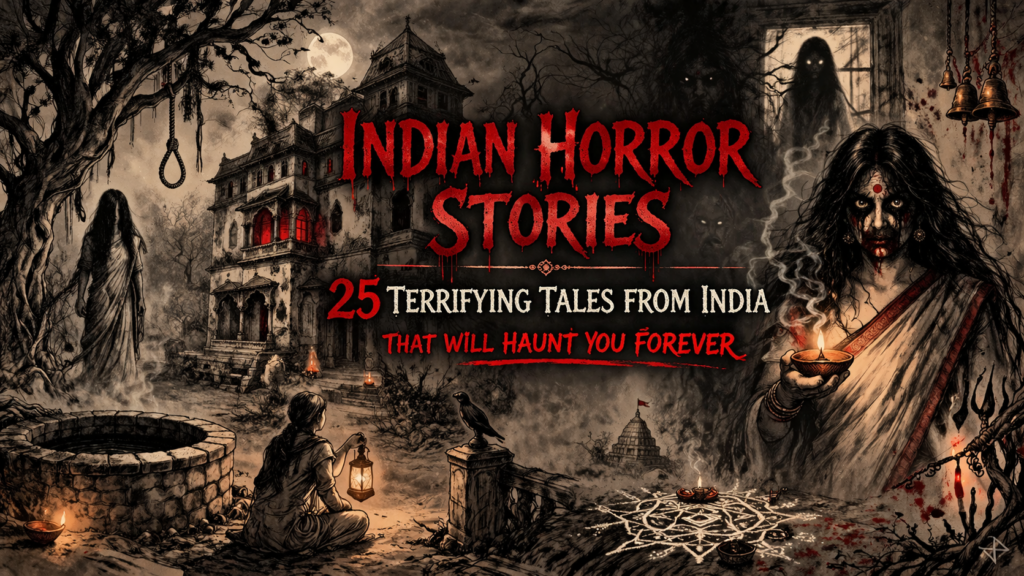
Indian Horror Stories: 25 Terrifying Tales From India That Will Haunt You Forever
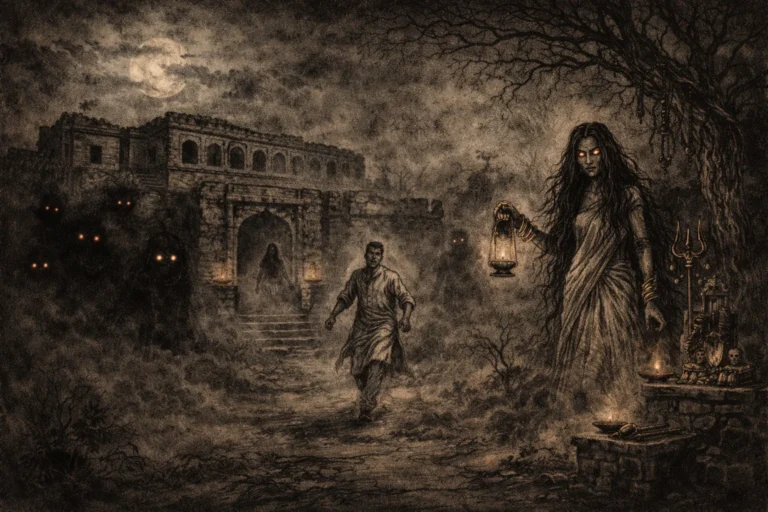
Raat ke teen baj rahe hain. The power just went out. Somewhere outside, a dog is howling at something you cannot see. You pull your blanket up — not for warmth, but for the instinctive, ancient human need to have something between you and the dark.
You were warned not to read this tonight. You didn’t listen.
Neither did they.

These are 25 real, terrifying tales from the length and breadth of India — from Bengal’s misty swamps to Rajasthan’s golden graveyards, from Kerala’s rubber forests to the snow-dusted mountain villages of Uttarakhand. Stories that grandmothers whisper. Stories that priests refuse to repeat. Stories that people who lived through them wish they could forget.
Shuru karte hain.
Indian Horror Stories and Entities
The Horror Stories of North India
1. The Nishi Dak — Bengal’s Most Deadly Voice
It is 2 AM in a village outside Kolkata. You are half-asleep when you hear it — your mother’s voice, calling your name from outside. Soft. Warm. Familiar.
But your mother is lying right next to you, fast asleep.
The Nishi Dak — the Call of the Night — is the most feared supernatural entity in Bengali folklore. It takes the voice of your most beloved person and calls you outside into the darkness. It calls your name exactly twice. If you answer, if you step outside, it reveals its true form and takes your life before dawn.
The rule passed down through generations in Bengal is simple and absolute: Never respond to your name at night unless you see the person with your own eyes. A rule that, once learned, you will never, ever forget.
Must Read : Full Story of Nishi Dak – Bangla Horror Folklore
2. Muhnochwa — The Face Scratcher of Kanpur
This one isn’t ancient. It happened in 2002, in Kanpur, Uttar Pradesh, in broad living memory.
A creature — glowing, metallic, described by witnesses as insect-like and moving at impossible speed — began attacking people in their sleep. It scratched faces violently, leaving deep gashes. It moved through neighborhoods faster than any animal could. Seven people died. Dozens were hospitalized. Police set up night patrols across the city. Politicians demanded answers. Scientists offered explanations that nobody believed because the attacks fit no known creature’s pattern.
Then — the attacks stopped. As suddenly as they began. No creature was caught. No official explanation was ever accepted.
The Muhnochwa remains one of the most disturbing mass-horror events in modern Indian history. Because it has police reports. It has hospital records. It has death certificates.
It just doesn’t have an explanation.
3. The Lakkad Sunghwa — The Child-Stealer of UP and Bihar
Your mother warned you about this one.
A child walking home alone. A stranger approaches — friendly, harmless. He holds out a piece of wood. “Dekho, beta — yeh kya hai? Isko sunghna zara.” Just smell it. Just lean in.
The child leans forward.
And then — nothing. Gone.
The Lakkad Sunghwa is the child-stealing spirit of eastern UP and Bihar’s village folklore — described as a tantric-possessed figure who uses enchanted, narcotic wood to render children unconscious before spiriting them away permanently. For generations, this story has been the reason village mothers in these regions don’t let their children walk alone after dark.
And the truly disturbing part: dozens of unexplained child disappearances from isolated villages in these regions across decades have never been solved. No suspect. No body. No answer.
4. The Haunting of Dow Hill — Kurseong, West Bengal Horror Story
There is a school in Dow Hill, Kurseong that closes every year from December to March. During those three months, the locals do not use the road that runs through the surrounding forest. They will not walk it. Not for any reason. Not at any price.
The forest road is where a headless boy has been seen — walking between the trees, moving with purpose toward somewhere he never seems to reach. Loggers working in the forest have reported the sound of footsteps following them, matching their pace perfectly, stopping only when they stop. The school itself — Victoria Boys’ School — has a history of workers and caretakers reporting apparitions in the empty corridors during the closed months.
Dow Hill is not a rumor. It is a place on the map. And the locals who refuse to walk that road are not afraid of stories. They are afraid of what they have personally seen.
5. The Weeping Widow of Firozpur — Punjab
In a village outside Firozpur, there is a keekar tree that has been wrapped in red cloth and iron nails for over a hundred years. No one cuts it. No one touches it. Children are told from birth to cross to the other side of the road when passing it.
The story is this: a young widow was dragged out of her home by village men who believed she had brought bad luck to the village after her husband’s death. They beat her to death beneath that tree and buried her in its roots.
She has never left.
People who mock the tree — who pull the red cloth, who touch the nails — report the same experience within days: the sound of a woman crying in their home at night, from a source they cannot locate. It moves between rooms. It responds to their name. It stops only when they return to the tree and replace what they removed.
The red cloth on that tree is always fresh. Someone always replaces it.
The Horror Stories of South India
6. Yakshi — The Beauty in the Palm Tree, Kerala
A lone man walks a quiet Kerala road at midnight, lined with tall palms. He notices a woman sitting high in the tree — breathtakingly beautiful, dressed in white, smiling down at him.
He smiles back.
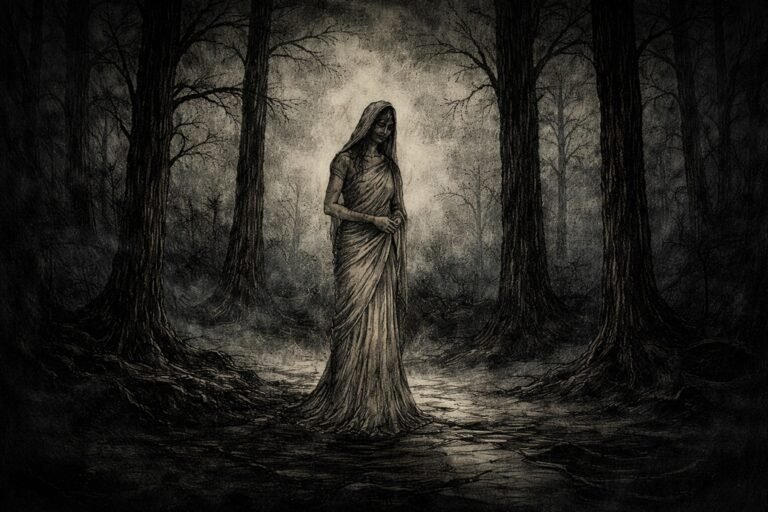
The Yakshi is the most feared entity in Kerala folklore — the spirit of a woman who died a violent, unjust death, transformed into a being of impossible beauty and bottomless rage. She lures men with her appearance, draws them close, and when they are entirely ensnared — she reveals what beauty has been hiding.
Old palm trees across Kerala are still marked with sacred symbols by temple priests. Not decoration. Not tradition. A warning. A binding.
7. Mohini — The Fragrance Before the Fire
The Mohini of South Indian village horror is not the divine enchantress of mythology. She is something older and darker — the spirit of a woman who died without ever knowing love, carrying that longing like a wound that never healed.
Her arrival is announced not by sight or sound but by smell — a fragrance impossibly sweet, intoxicating, wrong in the way that beautiful things sometimes are when they are not meant for you. Those who follow the fragrance find a woman of heartbreaking beauty.
And legs that burn with invisible fire.
She targets couples specifically. Lovers walking home. Newlyweds. The happy. She does not forgive what she was denied. Villages in Tamil Nadu and Karnataka still maintain specific rituals on Amavasya nights specifically to keep Mohini at bay — rituals maintained not out of habit, but out of memory.
8. The Kamarottu Disappearances — Coastal Karnataka
No mythology frames this one. No folklore packaging softens it.
In a small coastal village in Karnataka, beginning in 2001, a pattern emerged that no investigator has ever officially explained. Every year, on July 7th, a pregnant woman disappeared from the village. For twelve consecutive years.
The detail that makes this truly unbearable: in several of those years, even the victim’s own family did not know she was pregnant at the time of her disappearance.
Twelve women. Twelve years. Same date. The village is known for its ritual possession practices — trance ceremonies where spirits are invited into human bodies. Whether the disappearances are connected to something human or something beyond human, the investigations were closed without resolution.
The date still comes every year. The village is still there.
9. The Chain Tree of Wayanad — Kerala
On a stretch of mountain road through the Wayanad Ghats, there is a tree unlike any other in India. It is wrapped in heavy iron chains — bolted and locked. The chains are replaced when they rust. Offerings of flowers and incense are placed at its roots every week.
The chains are not decorative.
Karinthandan was a tribal guide who helped British surveyors navigate the dangerous Wayanad passes. When his usefulness ended, the British killed him and left his body at the foot of this tree. His spirit, furious at the betrayal, began luring travellers off the road and into the ravines below. Accidents on that stretch became too frequent, too deliberate.
A temple priest eventually bound Karinthandan’s spirit to the tree through ritual. The chains are the physical seal of that binding.
The road below remains dangerous. Locals know: you acknowledge the tree. You do not mock it. You do not stop to take photographs without first asking permission — quietly, respectfully, with your eyes down.
10. Masan — The Ghost of the Cremation Ground
Every cremation ground in rural India is watched by a Masan — a spirit born from the ashes of people who died angry, whose last emotion was fury or grief so intense it refused to disperse with the smoke.
The Masan does not haunt the living generally. It has a specific preference: children who wander near the cremation ground after dark. It follows them home. It sits at the foot of their bed. And slowly, over weeks, it drains them — the child grows pale, listless, stops eating, stops speaking. The parents notice but cannot explain it. The vaid finds nothing physically wrong.
The treatment — in villages across UP, Bihar, and MP — involves a specific ritual done at the cremation ground itself, at midnight, by a knowledgeable priest. The family brings the child. The priest speaks. Something is offered.
And if the ritual works — the child comes back. Slowly. Like a fire relit from cold ash.
The Stories of East India
11. Aleya — The Ghost Lights of the Sundarbans
The Sundarbans at night is already a place that science struggles to fully explain — the largest mangrove delta on earth, where tigers walk paths that don’t appear on maps and the water changes direction without warning.
But the fishermen fear one thing above all else: the Aleya lights.
Soft, glowing orbs that drift across the water’s surface in the darkness. Beautiful. Calm. Beckoning.
They are the spirits of fishermen who drowned — still working, still trying to complete their last journey, still leading other fishermen off safe channels and into the deep, murky water where the current takes everything and returns nothing.
Science calls them bioluminescence and methane gas. The fishermen who have followed the lights and survived call them something else entirely. And the fishermen who followed the lights and didn’t survive — they’re the ones making them now.
12. Shakchunni — The Married Woman Who Won’t Leave
The Shakchunni is specific in a way that makes her more terrifying than a general spirit — she was a married woman in life and she cannot accept that life is over. She possesses other married women — specifically women who wear conch shell bangles and sindoor — and lives through them. Eats through them. Speaks through them.
The possessed woman begins behaving strangely. Her voice changes pitch unexpectedly. She develops a sudden craving for fish and sweets. She speaks to people who aren’t in the room. Her husband notices her eyes are almost right — almost his wife’s — but not quite. Like a familiar song played in the wrong key.
Bengali families know the signs. And they know that calling the wrong kind of attention to it — shouting, confronting, challenging — makes the Shakchunni dig deeper. You have to approach her carefully. Respectfully. You have to ask her to leave.
13. The Cursed Village of Garh Mukteshwar — UP
On the banks of the Ganga near Garh Mukteshwar, there is a village that floods every monsoon — always has, always will. But the villagers don’t move. They rebuild, every year, in the same place.
Because they cannot leave.
The story is that two hundred years ago, a holy man cursed the village after its residents robbed and killed him as he traveled through on pilgrimage. His dying words were that every family who tried to permanently leave would find their new home destroyed within a year, their new land barren, their new children sick.
Multiple families have tried across generations. And multiple families have returned — shaken, quieter than before — unwilling to explain exactly what happened in the year they spent away.
The village exists. The Ganga floods it every monsoon. And the people stay.
The Stories of West India
14. Rakt Paas — The Tantric of the Rann
In the barren borderlands of Gujarat, a tantric named Rakt Paas attempted the Babra Bhoot Sadhana — one of the most forbidden rituals in the left-hand path of Indian tantra.
Seven continuous nights of chanting. His own blood in a clay vessel. The invocation of a Babra Bhoot — a spirit driven permanently mad by violent death, trapped between worlds, full of untamed rage.
On the sixth night, his rhythm faltered. Half a second. One mispronounced syllable.
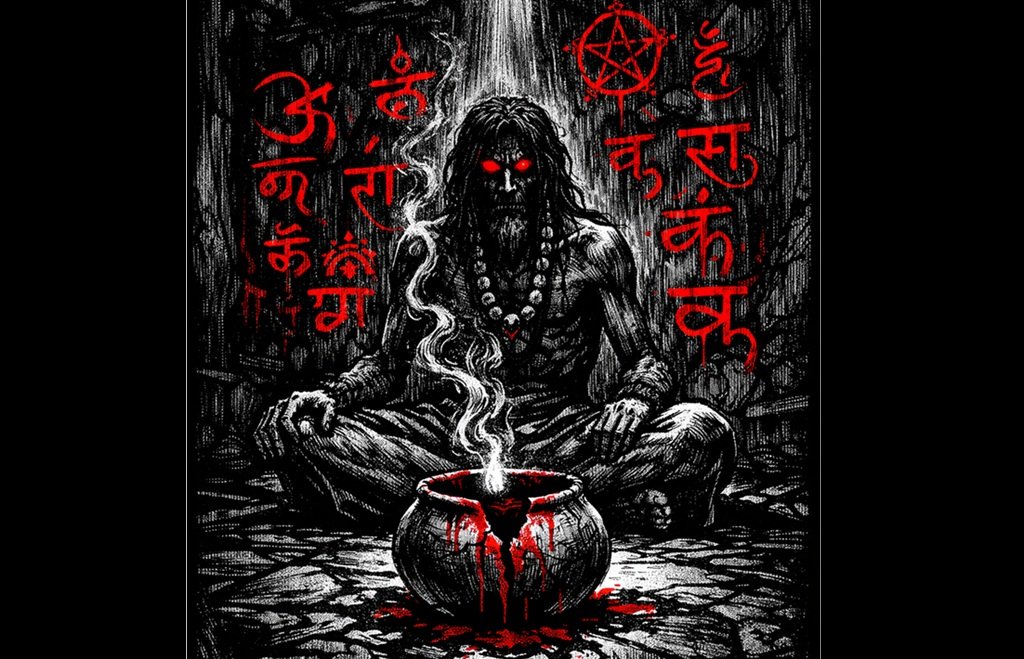
The entity did not stay bound. It spread through the village — livestock died, a child spoke in an unrecognized dialect for six hours straight, an old man stopped recognizing his wife of sixty years. The tantric was never found. In the center of his ritual room: a cracked vessel. Corrupted symbols on the wall. And a single tooth — his own, placed deliberately — as payment to something that should never have been offered anything.
The shrine built on that site still stands. The red thread on the neem tree at its center is replaced every Amavasya.
Must Read : Rakt Pass Full Horror Story
15. Kuldhara — The Village That Cursed Itself Into Silence
Near Jaisalmer, in the heart of your Rajasthan, lies Kuldhara — a prosperous village of 1,500 Paliwal Brahmin residents that emptied completely in a single night. Pots still on the fire. Clothes still hanging. Futures half-lived.
They didn’t flee. They cursed the land before leaving — declaring that no one would ever live in peace in Kuldhara again.
Paranormal investigators have documented strange energy readings, unexplained audio recordings, and a feeling of chest-tightening heaviness the moment you enter the ruins. The Indian Paranormal Society investigated here. They finished their work before full dark.
Kuldhara is a real place. The curse appears to have held.
16. The Bhangarh Boundary
Bhangarh Fort in Alwar district carries the only official government sign in India that reads: “Entry after sunset is strictly prohibited.” The Archaeological Survey of India does not joke.
The story: a sorcerer named Singhiya cursed the entire kingdom after the princess he desired rejected him — trapping every soul within the walls for eternity. Visitors report cameras failing, compasses spinning without cause, the sound of anklets in empty corridors, and an oppressive feeling of being watched by something that has been waiting a very long time.
The fort is visited by thousands. Most leave before dark. The ones who have stayed past sunset don’t often talk about it in full sentences.
17. The Haunted Stepwell of Adalaj — Gujarat
Adalaj Vav is one of the most beautiful stepwells in India — five stories deep, intricately carved, built by a queen named Rudabai in memory of her husband. It is also, according to every person who has worked in it after dark, deeply, profoundly wrong after sunset.
The story that locals carry: Rudabai was coerced by a sultan into agreeing to marry him in exchange for completing the stepwell her dying husband had begun. The moment the construction was complete, she walked to the deepest level — and drowned herself in the water rather than keep that promise.
Her grief, it seems, never fully left the water.
The Stories of Northeast and Central India
18. Bemni — The Mountain Village Where Faces Change
In Uttarakhand’s mountain mist lies Bemni — a real village on real maps where people go missing with disturbing regularity and visitors report something that no haunted-house story quite captures: faces that don’t match.
Familiar people, seen from a slight distance, who turn around and reveal eyes that belong to someone else. Something else. Wearing a familiar form the way you wear a coat — put on, not grown.
One account from a wedding visitor: the bride’s veil slipped during the ceremony. What she saw beneath it was not her best friend’s face.
19. The Deer Park Ghost of Bhopal
Near the old Deer Park in Bhopal lies a stretch of road that auto-rickshaw drivers refuse to cover alone after midnight. Not collectively, not as a rule — each one individually, through their own experience.
A woman in white. Always walking in the same direction. Always at the same point in the road. Drivers who have offered her a ride report that she gives an address, sits in perfect silence, and at the destination — is simply no longer in the vehicle. The address she gives is always the same. It belongs to a house that burned down in 1987.
20. The Baak — Bengal’s River Hunter
The Baak is a shape-shifting water spirit of Bengali folklore that specifically targets people near rivers and ponds. It takes the appearance of someone you trust — a friend, a family member, a neighbor — and beckons you toward the water.
What distinguishes the Baak from other water spirits is its intelligence. It doesn’t just lure. It converses. It knows the right things to say. It knows your name, your family, your history. It is patient. It will walk beside you for miles, talking, making you comfortable, before it guides you to the edge and completes its purpose.
The only tell: it casts no shadow. In any light. At any angle.
21. The Vetala — The Spirit in the Corpse
From the ancient texts — older than most stories on this list — comes the Vetala. A spirit that inhabits dead bodies, reanimating them to move among the living. The Vetala is cunning and deeply intelligent, delighting in riddles, in confusion, in turning people against each other.
It does not moan or stumble. It speaks normally. It laughs at the right moments. It sits at your dinner table and eats and asks about your day. The only way to identify it is to notice what it never does: it never speaks of the future. It cannot. It has no future to imagine.
22. Kichkandi — The Child Ghost of Assam and Bengal
The most heartbreaking horror is always the one that wears an innocent face.
The Kichkandi is the spirit of a child who died before their time — and who cannot understand why no one will play with them anymore. It appears in dark rooms, in empty playgrounds after dusk, in the corner of a child’s bedroom. It laughs. It calls other children to play.
The children who interact with it become sick. Withdrawn. They stop eating. They have conversations at night with someone their parents cannot see.
Mothers across Assam and Bengal know the signs. And they know the first rule: never let your child play in an unlit room alone.
The Final Three — The Ones That Stay
23. The Pichal Peri — Feet Facing the Wrong Way
Across Pakistan and North India’s Punjabi belt, the Pichal Peri is identified by one detail alone: her feet point backward.
Everything else about her is perfectly, disarmingly normal. She appears as an ordinary woman — walking alone at night, needing help, asking for directions, requesting company on a dark road. And the man who agrees to help walks beside her, makes conversation, and then — happens to glance down.
The feet. Backward. Heels forward, toes behind, walking forward anyway.
By the time he notices, she has already turned to face him. And the smile she shows him then is not the one she had a moment ago.
24. The Pret — India’s Angriest Ghost
The Pret is formed from a specific kind of death: sudden, violent, and without proper last rites. A person killed in an accident on a highway at night. A farmer who drops dead in his field alone. A body that is not found for days.
These souls become Pret — a specific category of aggressive, hungry spirit in Hindu tradition, driven by the denial of their right passage. They attach themselves to locations and to family lines. They cause illness, infertility, financial ruin. They do not wander randomly — they have targets. The families of the dead who failed to find them, failed to perform the rituals, failed to let them go properly.
Priests who specialize in Pret-related rituals are among the most sought-after in rural India. And they are never out of work.
25. The Thing Beneath the Peepal Tree
Save the most ancient for last.
Every village in India has a peepal tree that is treated with specific reverence — offerings left at its roots, red thread tied around its trunk, a diya lit on Saturday nights without fail. Not all of this is worship. Some of it is containment.
The peepal tree is considered a home of spirits in virtually every regional tradition across India — from Kashmir to Kanyakumari. The specific spirit beneath the oldest peepal in a village is nameless in most traditions. It predates the village itself. It was there before the first family arrived, and it will be there after the last one leaves.
It does not ask for much. The diya. The thread. The acknowledgment that something was here before you, and will be here after.
What it does when these things are forgotten — when the tree is cut, when the diya goes unlit, when the young people of the village laugh at the old customs — is remembered in every family that ever made that mistake.
And remembered only once.
Why India’s Horror Is Unlike Anything Else on Earth
Every one of these 25 stories carries inside it a real human wound — the rage of betrayal, the grief of unjust death, the sorrow of lives unlived, the fury of the forgotten. Indian horror is not about monsters that want to kill you. It is about souls that want to be acknowledged.
The Yakshi wants her injustice recognized. The Rudali wants someone to cry for her. The Pret wants his rites performed. Even the Nishi Dak, in its terrible way, is mimicking love — using the sound of the thing most precious to you because it knows that is what opens doors.
Yeh sirf darr ki kahaniyan nahi hain. Yeh unki kahaniyan hain jo bhool gaye the.
These are not just horror stories. These are the stories of those who were forgotten.
Ab apna diwaala thaamein. Ek baar phir bahar dekhein. Peepal ke neeche woh diya — kya aaj bhi jal raha hai?
Check the diya beneath the peepal tree.
Make sure it’s still burning tonight.