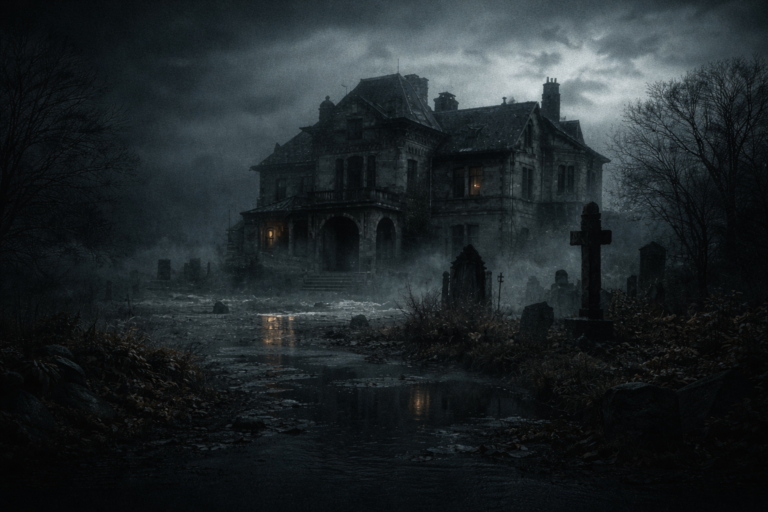
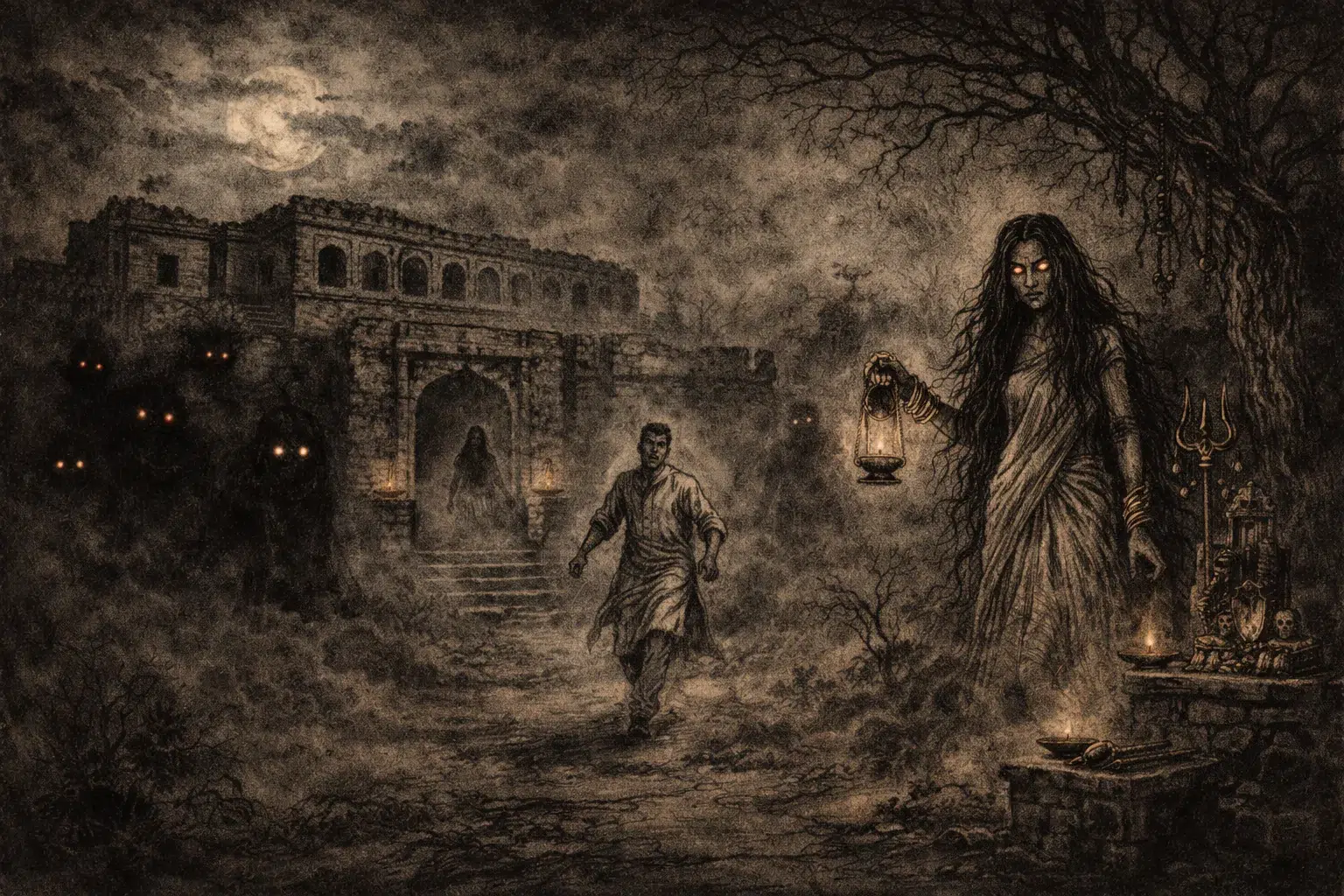
Do you know the bhangarh fort real horror story that scares everyone to this day?
Let me tell you something about Bhangarh that the travel blogs won’t.
They’ll tell you it’s a “must-visit heritage site in Alwar district.” They’ll give you the coordinates, the entry timings, the nearest railway station. They’ll mention — almost as an afterthought, like it’s a fun quirk — that the Archaeological Survey of India has put up a board outside the fort that explicitly prohibits entry after sunset.
The ASI. India’s most bureaucratic, paperwork-driven, slow-moving government body. An organization that will take fourteen years to decide whether to repaint a monument’s information board.
They didn’t hesitate for a single second before putting up that sign at Bhangarh.
Entry after sunset strictly prohibited.
No explanation given. None needed.
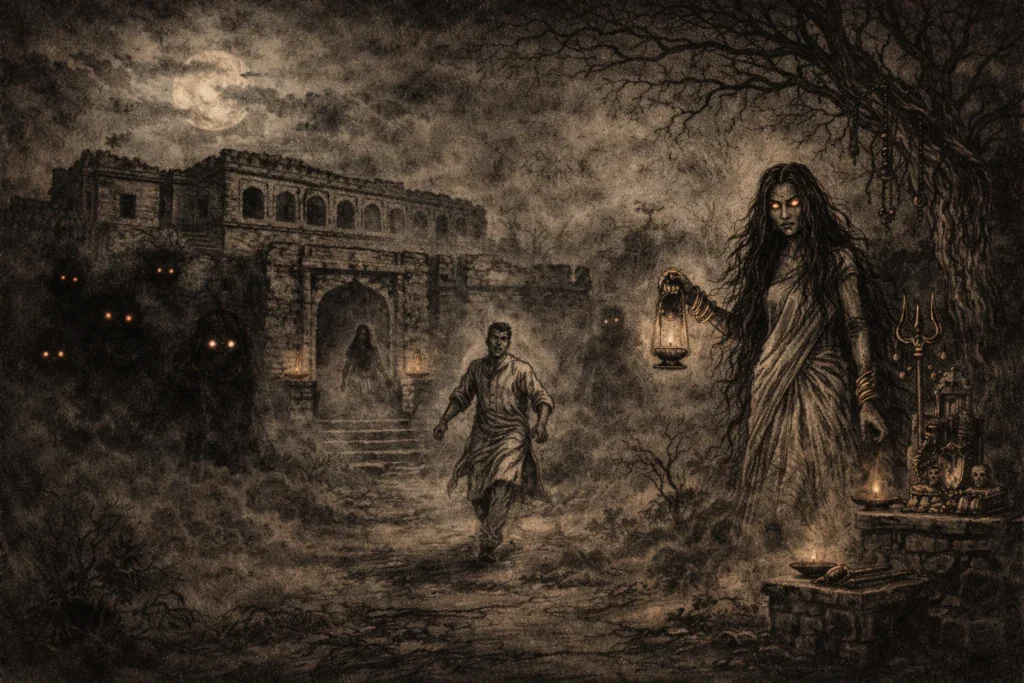
Bhangarh Fort Real Horror Story
Bhangarh sits in the Aravalli hills of Rajasthan, about 85 kilometers from Jaipur. It was built in 1573 by Raja Bhagwant Das for his younger son Madho Singh. For a few decades, it was a proper functioning city — temples, markets, thousands of residents, a royal court, all the noise and mess and life that comes with civilization.
Then, sometime in the late 17th century, it emptied.
Not conquered. Not burned. Not flooded or struck by disease in any historically documented way.
Just… emptied.
The people left. The city stopped. The roofs — and this is the detail that gets under your skin if you think about it long enough — the roofs collapsed. Every single house inside the fort walls lost its roof. Local legend has a very specific explanation for this: no structure inside Bhangarh can be roofed. Every attempt to build a roof over the ruins fails. The stones fall. The construction collapses.
Whether you believe that or not, the visual reality of Bhangarh is striking. You walk through what was once a thriving city and every building is open to the sky. Temple spires intact. Walls standing. No roofs. Anywhere.
As if the sky itself claimed the place and refuses to give it back.
Also Read: 25 Terrifying Horror Story of India
Two Curses, One Fort
Ask a local about Bhangarh and you won’t get one story. You’ll get two. And the interesting thing is they don’t contradict each other — they layer on top of each other like old paint, each adding something the other lacks.
The Curse of Guru Balau Nath : Bhangarh Fort Real Horror Story
Before the fort was built, a sadhu — an ascetic holy man — named Balau Nath lived and meditated in these hills. He had a condition for anyone who wished to build here: the shadow of the buildings must never fall upon his meditation place.
Raja Bhagwant Das agreed.
Madho Singh’s son — or in some versions, Madho Singh himself — was not so careful. As the fort expanded and grew, someone decided to add a taller structure. The shadow fell.
Balau Nath cursed the entire city. Not just the rulers. Everyone. Every living soul within the walls.
The city will fall. No one will survive. No roof will stand.
And then he disappeared into the hills, leaving behind nothing but the word, and eventually, the silence.
The Curse of the Sorcerer Singhia : Bhangarh Fort Real Horror Story
This one is darker. More personal. And frankly, more compelling as a story.
Princess Ratnavati was, by all accounts of the legend, extraordinarily beautiful. Not just locally — her reputation had traveled. Suitors came from neighboring kingdoms. She was seventeen, and her future was the subject of everyone’s conversation.
A tantric sorcerer named Singhia was obsessed with her. Not the respectful, hopeful obsession of a suitor who knows his place, but the consuming, dangerous kind that doesn’t accept the word no. He knew he had no legitimate path to her — the difference in their stations made it impossible. So he turned to black magic.
He found her handmaiden purchasing perfumed oil in the market. He cast a spell on the oil — a binding, enthralling enchantment. The plan: the princess would apply it, fall under his power, and come to him.
The princess saw through it.
She picked up the bottle, recognized the dark energy in it, and threw it away from her — onto the ground, or in some versions, against a boulder nearby.
The oil hit the stone. The spell reflected back. Singhia was crushed — by the very boulder the enchanted oil struck, in the vivid village telling of it — and as he died, he cursed Bhangarh with his last breath.
The princess, the king, everyone in this fort. None will find peace. None will be reborn. You will all wander these ruins, forever.
Within a year — in the legend’s timeline — Bhangarh fell in a battle against the forces of Ajabgarh. The princess died. The city died with her.
And Singhia, denied even in death, still haunts the place he destroyed.
What People Actually Experience There
Here is where I want to be honest with you, because I think honesty makes this more interesting, not less.
Bhangarh is a popular tourist destination. Hundreds of people visit during the day — families, photography enthusiasts, history buffs, and yes, horror tourists who want the bragging rights. During daylight it is genuinely beautiful. Ancient temples with intricate carvings. Long corridors. The Aravalli hills rising behind the walls, green in monsoon, golden in winter light.
During the day, it’s a heritage site.
What happens at night is a different category of report.
Locals from the villages surrounding Bhangarh — Gola ka Baas, the settlement just outside the fort walls — do not go near the ruins after dark. Not as performance. Not for tourists. They simply don’t go. This has been consistent across generations, documented by journalists and researchers who’ve visited the area over the decades.
The specific experiences reported by the handful of people who have stayed near or inside the fort after dark — some of them researchers, some of them thrill-seekers who ignored the signs — cluster around a few consistent details:
- Sudden, sourceless smells. Perfume and flowers where there is no vegetation. The specific scent of incense from temples that have been dead for centuries.
- Light anomalies. Moving lights inside the ruins at night, seen from the outside. Not reflections. Not animals. Moving with direction and purpose.
- Sound. Music — faint, rhythmic — and the sound of a crowded market, voices overlapping, from deep inside the ruins. As if the city is still going about its day, just slightly out of phase with the present.
- Animals behaving wrongly. Dogs that will not approach the walls after dark. Birds that flush from the ruins at sunset and don’t return until full morning light.
- An overwhelming sense of being watched. Not one person — every person who has reported a night experience at Bhangarh describes the specific feeling of multiple presences, an entire crowd of attention, focused on them.
None of this is scientifically admissible. I’m not presenting it as proof of anything. But the consistency of the reports, across different people with no connection to each other, across different decades, is the kind of detail that deserves acknowledgment rather than dismissal.
The Sign
Let’s come back to the Archaeological Survey of India’s board, because it matters more than people give it credit for.
The ASI manages over 3,600 protected monuments across India. Exactly one of them has a board prohibiting entry after sunset with no structural or safety reason offered.
Bhangarh.
The ASI’s official position — the one they give in press statements — is that the sign is there for visitor safety and to discourage trespassing. Reasonable. Bureaucratic. Satisfying to no one.
Because here’s the thing: the ASI employs caretakers at Bhangarh. These are government workers, people with practical, rational, salary-drawing jobs. Ask the caretakers who live in the quarters just outside the fort walls whether they go inside at night.
They don’t.
Ask them why.
The answers vary in language. They’re consistent in message.
We just don’t go inside after dark. That’s how it is here.
Bhangarh and the Shape of Real Dread
Most horror — films, stories, haunted houses — works by startling you. Jump scares. Sudden loud noises. The thing that leaps from the dark.
Bhangarh doesn’t work like that.
Bhangarh works through accumulation. You arrive in the afternoon and it’s just a fort. Old, beautiful, historically interesting. You walk through the Hanuman temple, the Gopinath temple, the Someshwar temple — all still standing, all still drawing visitors who leave offerings. You walk the market lane and realize you’re walking over the actual stones that actual merchants stood on four centuries ago.
And slowly, as the afternoon light changes and the shadows start to stretch, something about the place begins to register differently. The scale of the abandonment. The roofless houses stretching in every direction, open to the sky in unison. The absolute silence — not peaceful silence, but the silence of a place that was once loud and suddenly stopped.
Something happened here. The stones remember it, even if the history books are vague.
By the time sunset approaches and the ASI caretaker starts moving visitors toward the exit — politely, but with a firmness that doesn’t invite argument — most visitors are already moving. Not because of the sign. Because of something the place has done to them quietly, over two or three hours, that they can’t quite name.
That’s real dread. The kind that doesn’t need a jump scare. The kind that settles in your chest and asks you to reckon with the possibility that you are standing somewhere that something ended badly, and that ending hasn’t finished yet.
The Princess and the Perfume: A Closer Reading
The Singhia story is the one that lingers.
Not because it’s the most dramatic — though it is — but because of what it’s really about. Strip away the sorcery and here is what you have: a powerful man who felt entitled to a woman, who used every tool available to him to take what he wanted, who was rejected, and whose response to rejection was to destroy everyone around the person who said no.
She didn’t even reject him for someone else. She rejected him for herself. She saw the enchanted oil, understood what it meant, and threw it away.
And he cursed everyone for it.
The legend of Bhangarh is, at its heart, a story about what obsession and entitlement cost everyone except the person who chose them. Singhia is gone, but the curse he left behind — the wandering, the rootlessness, the inability to move on — that’s his real legacy.
The princess, in most versions, eventually finds peace. Is reborn. Moves on.
Singhia never does.
He’s still there. In the ruins. In the sourceless perfume smell at midnight. In the watching presence that everyone describes and no one can explain.
He wanted her forever. He got Bhangarh forever.
That’s not a horror story. That’s a sentence.
Before You Visit
If you’re in Rajasthan — and given you’re in Jaipur, Bhangarh is barely two hours away — here is the practical reality of visiting:
- Open from sunrise to sunset only. No exceptions that the ASI will officially accommodate.
- Entry fee is minimal. The site is well-maintained during open hours.
- Go in the late afternoon if you want to feel the atmosphere shift. The morning is too bright and busy. The last two hours before closing are when the place reveals its character.
- The drive through Sariska Tiger Reserve on the way is worth the trip even independently.
- The village of Gola ka Baas just outside has local families who’ve lived alongside the ruins for generations. If you can have a conversation with any of them, do. What they know about this place doesn’t appear in any travel guide.
And whatever you decide about the sign — whatever you think about curses and sorcerers and wandering spirits — I’ll just say this:
The Archaeological Survey of India put up that board for a reason.
They haven’t explained the reason.
You probably don’t need them to.
Rajasthan doesn’t run out of darkness. Bhangarh is the most famous chapter, but there are older, quieter, stranger stories in these hills — stories that haven’t made it to the travel guides yet. Those are the ones worth finding.