I’ve read about a lot of ghosts. Churels, Vetalas, Pisachas, Bhutas — Hindu mythology has no shortage of terrifying supernatural beings. But when I first came across the Brahmarakshasa in the ancient texts, something was different. This wasn’t a spirit that attacked out of hunger or rage. It reasoned. It remembered. It was, by every ancient account, the most dangerous Hindu ghost not because of its physical power, but because of its mind.
If you’ve searched for “what is a Brahmarakshasa,” “the most intelligent spirit in Hindu mythology,” or “types of Hindu ghosts and their powers,” this post will take you far deeper than any surface-level answer. We’re going into the Puranas, the Dharmashastra texts, the exact conditions that create a Brahmarakshasa, why forgotten mantras are at the center of this curse, and what makes this fallen Brahmin ghost genuinely unlike any other supernatural being in Indian tradition.
What Is a Brahmarakshasa in Hindu Mythology?
The word Brahmarakshasa is a compound of two Sanskrit roots: Brahma — referring here not to the creator god but to Brahman, the sacred knowledge held by a Brahmin — and Rakshasa, meaning demon or malevolent being. Put them together and you get something precise and chilling: a demon born from corrupted sacred knowledge.
A Brahmarakshasa is not a random ghost. It is not a person who died violently or whose body went unburied. It is specifically the spirit of a Brahmin — a scholar, priest, or learned man — who misused, withheld, sold, or simply abandoned the sacred knowledge entrusted to him during his lifetime.
In Hindu cosmology, a Brahmin’s primary duty — his dharma — was to learn, preserve, and transmit Vedic knowledge. He was the living library of civilization. When a Brahmin failed that duty, the consequences didn’t end at death. They followed him into the afterlife and twisted him into something that retained his intelligence but lost everything else.
The Brahmin Curse: How a Scholar Becomes a Brahmarakshasa
Understanding what creates a Brahmarakshasa ghost requires understanding how seriously Hindu tradition treated the misuse of sacred knowledge.
The ancient texts — including the Vishnu Purana, the Markandeya Purana, and several Dharmashastra works — describe specific acts that condemn a Brahmin to this fate after death:
- Teaching the Vedas for money — selling sacred knowledge was considered a corruption of the highest order
- Learning mantras but never practicing them — hoarding knowledge without using it for dharma
- Forgetting the mantras entrusted to him — neglect of sacred duty through laziness or distraction
- Teaching to the unworthy — transmitting Vedic knowledge to those who would misuse or dishonor it
- Hypocrisy — living the life of a scholar while secretly violating Brahminic codes of conduct
The most haunting of these conditions is the forgotten mantra. Imagine spending your life as a keeper of sacred texts, learning hundreds of complex Sanskrit verses and ritual formulas — and then, through arrogance or neglect, letting them slip from your memory. In Hindu tradition, a mantra forgotten by its keeper does not simply disappear. It becomes a wound in the fabric of dharma, and the one who forgot it carries that wound into the afterlife.
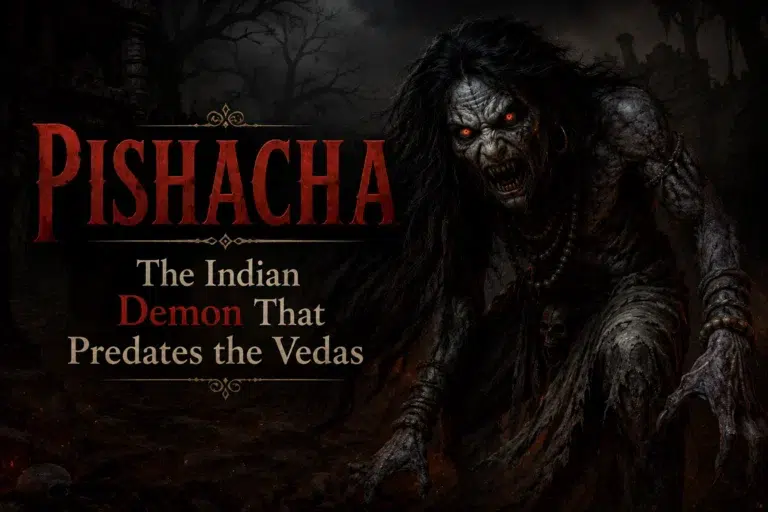
This is what separates the Brahmarakshasa from other Hindu ghost types like the Preta (a spirit tormented by unfulfilled desires) or the Pisacha (a flesh-eating ghost of base impulses). The Brahmarakshasa’s suffering is intellectual. It is haunted by what it once knew and can no longer access.
Why the Brahmarakshasa Is the Most Dangerous Ghost in Indian Mythology
Most supernatural beings in Hindu mythology are dangerous in predictable ways. The Vetala tricks you. The Churel seduces you. The Pisacha attacks your body. The Bhuta haunts a place.
The Brahmarakshasa is dangerous in a completely different way: it can think.
Because it was a learned man in life, it retains its intelligence in death. It remembers the structure of Sanskrit grammar. It understands ritual. It knows the weaknesses in mantras that a lesser spirit would never perceive. It can identify who in a village is spiritually unprotected, who has performed their rituals incorrectly, and precisely where to apply pressure.
Ancient texts describe the Brahmarakshasa as capable of engaging in philosophical debate, reciting corrupted versions of sacred verses to confuse its victims, and even posing as a wise teacher to trap the unwary. It is the only ghost in Hindu mythology that can genuinely deceive a learned person — because it speaks their language.
This quality earned it a unique description in several Puranic texts: “More dangerous than a Rakshasa, because it knows what you know.”
A demon can be warded off with the right mantra. A Brahmarakshasa knows the mantra too — and knows its limits.
Also read : 10 Lesser-Known Creatures from Indian Folklore
Brahmarakshasa Across the Ancient Texts
In the Puranas
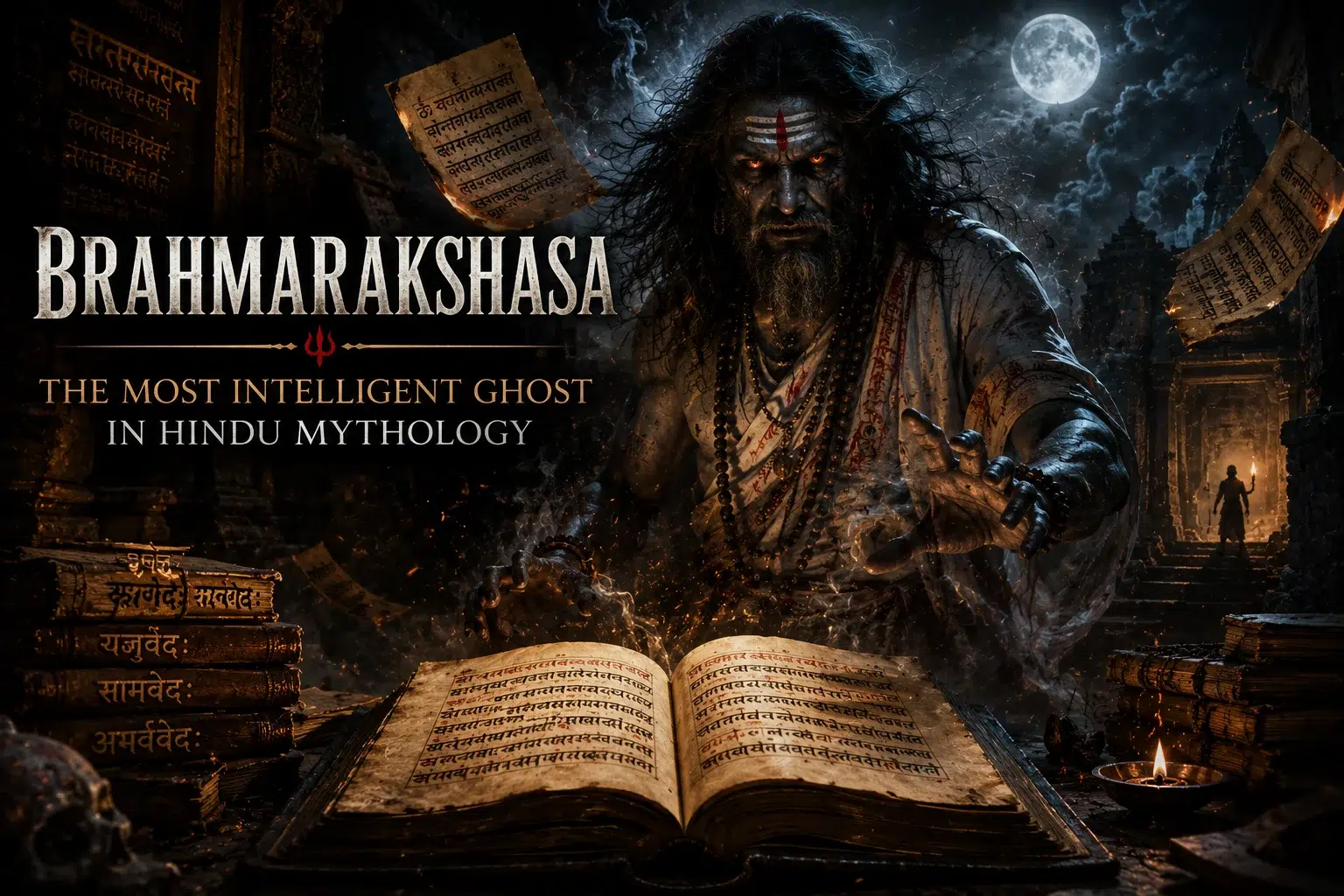
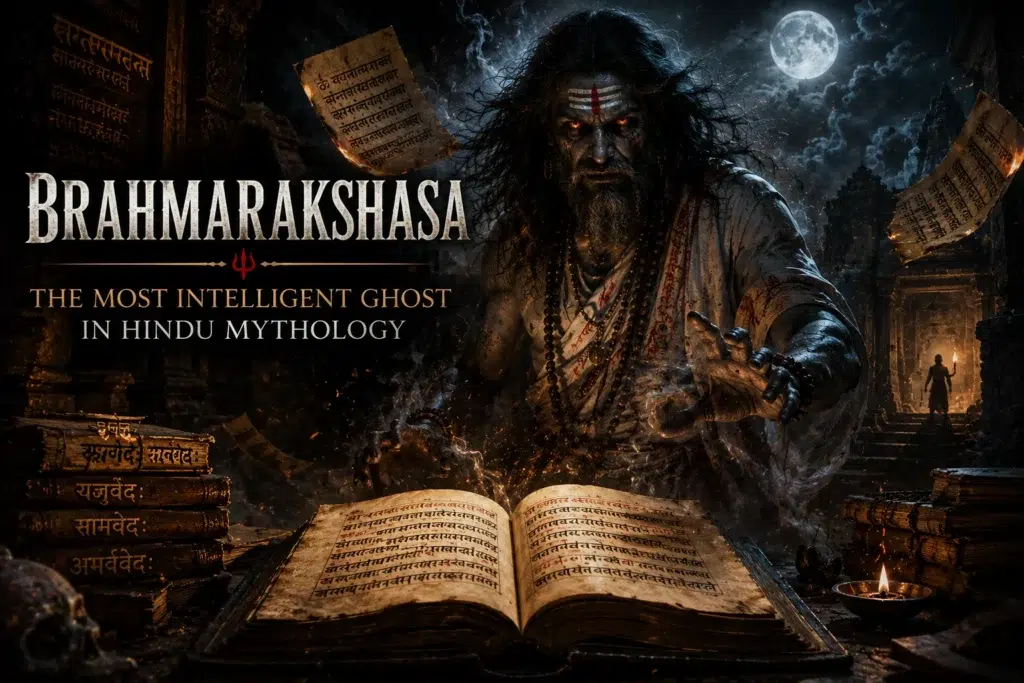
The Brahmarakshasa in Puranic literature appears most fully in the Vishnu Purana and the Markandeya Purana, where it is listed among the types of beings that a sinful Brahmin might become after death. The descriptions emphasize its terrifying appearance — enormous, dark, with matted hair, wearing the sacred thread (yajnopavita) that marks its former Brahmin status — alongside its intelligence and its fury.
The sacred thread detail is significant. The Brahmarakshasa does not shed its Brahmin identity in death. It carries the mark of what it was — and what it failed to be.
In the Ramayana and Mahabharata
References to Brahmarakshasa-type beings appear in both epics, typically in the context of Brahmin curses and the consequences of failing one’s duty as a keeper of dharma. The forest sequences in the Ramayana, where sages warn of spirits that haunt certain groves, often describe beings with the intelligence of a scholar and the hunger of a demon — a clear echo of the Brahmarakshasa tradition.
In Dharmashastra Literature
The legal and ethical texts of ancient India — including the Manusmriti — explicitly categorize the sins that lead to Brahmarakshasa rebirth. This is not mythology in the casual sense. These were moral warning systems embedded in law: behave this way, and this is what happens to you after death.
Brahmarakshasa vs Other Hindu Ghost Types
| Spirit | Origin | Primary Danger | Intelligence Level |
|---|---|---|---|
| Brahmarakshasa | Corrupt or negligent Brahmin | Intellectual deception, mantra corruption | Extremely high |
| Vetala | Spirit inhabiting a corpse | Philosophical entrapment, riddles | High |
| Pisacha | Sinful death, violent acts | Flesh consumption, possession | Low |
| Preta | Unfulfilled desires, improper last rites | Haunting, emotional manipulation | Moderate |
| Churel | Woman who died during childbirth | Seduction, draining life force | Moderate |
| Bhuta | Violent or accidental death | Territorial haunting, fright | Low to moderate |
The Brahmarakshasa stands alone at the top of this table. It is the only Hindu supernatural being whose danger is rooted primarily in knowledge rather than appetite, violence, or emotional torment.
How to Recognize and Ward Off a Brahmarakshasa
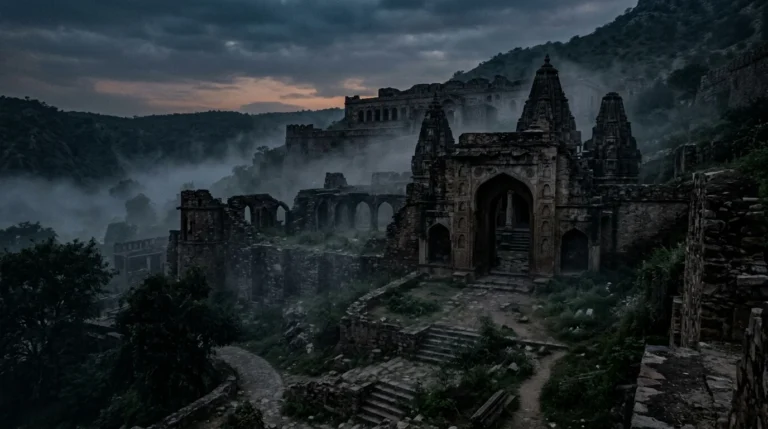
Traditional texts describe the Brahmarakshasa as haunting specific kinds of places: old peepal trees, abandoned temples, the ruins of former schools or gurukuls, and crossroads near cremation grounds. It is drawn to places where knowledge once lived and was then abandoned.
Its appearance, as described in the Puranas, is striking: very tall, with wild matted hair, glowing red eyes, and — most distinctively — the sacred thread of a Brahmin still worn across its chest. Some texts describe it as holding a partially eaten human body, a symbol of how it has turned the knowledge-keeper’s role into something consuming and destructive.
Protection Against a Brahmarakshasa
Ancient texts suggest that the Brahmarakshasa ghost is repelled by the correct and flawless recitation of Vedic mantras — precisely because its own corruption stems from mantra neglect. A person of genuine learning and dharmic discipline is considered largely safe from it.
The recitation of Vishnu Sahasranama (the thousand names of Vishnu) and the Hanuman Chalisa are traditionally considered protective. The logic is elegant: these texts, recited correctly and with devotion, represent the opposite of everything the Brahmarakshasa embodies — diligence over neglect, faith over corruption, remembrance over forgetting.
In folk tradition across North India and the Deccan, burning a lamp near a peepal tree at dusk and offering prayers is considered a way to pacify a Brahmarakshasa that may be trapped there, giving it the spiritual acknowledgment it never received in life.
The Brahmarakshasa in Modern Indian Storytelling
The Brahmarakshasa has not stayed locked in ancient texts. It has slowly made its way into modern Indian horror — though less prominently than it deserves.
In Hindi horror fiction, the Brahmarakshasa appears as the most feared entity in the supernatural hierarchy — the one that even other ghosts avoid. Several regional horror novels from Maharashtra and Uttar Pradesh have centered on a Brahmarakshasa haunting an old gurukul or abandoned Sanskrit school, a setting that perfectly captures the spirit’s tragic nature: the ghost of learning itself, rotting in a place where knowledge was once alive.
In Indian television horror — particularly the anthology formats that have flourished on OTT platforms — the intelligent ghost archetype that debates, tests, and manipulates its victims owes a clear debt to the Brahmarakshasa tradition, even when the character is not named explicitly.
The Brahmarakshasa is also one of the few Hindu ghost types that maps interestingly onto Western literary traditions. The scholar-turned-monster, the intellectual corrupted by pride or neglect — think Faust, think Frankenstein’s creature, think every story about a genius who abandoned his responsibilities. The Brahmarakshasa is India’s version of that archetype, and it is far older than any of them.
Frequently Asked Questions About Brahmarakshasa
What is a Brahmarakshasa in Hindu mythology?
A Brahmarakshasa is a type of ghost or demonic spirit in Hindu mythology created from the soul of a Brahmin — a scholar or priest — who misused, neglected, or forgot the sacred knowledge entrusted to him during his lifetime. Unlike most Hindu ghosts, the Brahmarakshasa retains its intelligence in death, making it uniquely dangerous among Indian supernatural beings.
Why is the Brahmarakshasa considered the most intelligent Hindu ghost?
Because it was a learned man in life, the Brahmarakshasa retains knowledge of Sanskrit, Vedic ritual, and mantra structure after death. It can deceive even educated victims by speaking in their language, identifying weaknesses in their ritual practice, and mimicking the role of a teacher or sage. Ancient Puranic texts describe it as more dangerous than ordinary Rakshasas because of this intellectual capacity.
What sins create a Brahmarakshasa?
Hindu texts including the Vishnu Purana and Dharmashastra literature describe several acts that condemn a Brahmin to become a Brahmarakshasa: selling sacred knowledge for money, hoarding mantras without practicing them, forgetting sacred verses through neglect, teaching the Vedas to unworthy students, and living hypocritically while claiming spiritual authority.
Where does a Brahmarakshasa haunt?
Traditional texts describe the Brahmarakshasa as haunting places where knowledge once lived and was then abandoned — old peepal trees, ruined temples, former gurukuls and Sanskrit schools, and crossroads near cremation grounds. It is drawn to the ruins of its former life as a keeper of sacred knowledge.
How is the Brahmarakshasa different from a Rakshasa?
A Rakshasa is a demon — typically powerful, violent, and motivated by appetite and ego. A Brahmarakshasa is specifically the ghost of a fallen Brahmin, meaning it retains scholarly intelligence alongside its demonic nature. It is considered more dangerous than an ordinary Rakshasa because it cannot be outwitted by knowledge alone — it already has that knowledge.
Can a Brahmarakshasa be freed from its curse?
Some texts suggest that a Brahmarakshasa can be liberated if a truly learned and virtuous person recites the sacred mantras the spirit once knew but forgot — essentially completing the spiritual duty the Brahmin failed to fulfill in life. This act of restoration is considered an act of great dharmic merit for the person who performs it.
Does the Brahmarakshasa appear in any Hindu texts by name?
Yes. The Brahmarakshasa is named and described in the Vishnu Purana, the Markandeya Purana, and several Dharmashastra texts. References to beings that match its description also appear in the forest cantos of the Ramayana and in sections of the Mahabharata dealing with Brahmin curses and the consequences of dharmic failure.
The Ghost That Remembers What It Lost
What makes the Brahmarakshasa the most haunting figure in Hindu ghost mythology is not its power. It’s its tragedy.
This is not a spirit that died in violence and doesn’t know where to go. This is a man who spent his life surrounded by the most profound knowledge human civilization has ever produced — and failed it. He forgot the mantras. He sold the secrets. He taught what he shouldn’t have and withheld what he should have shared. And so he carries that failure forever, trapped between the world of the learned and the world of the damned, remembered only in the ruins of places where wisdom used to live.
The Brahmarakshasa in Hindu mythology is a warning dressed as a ghost story. It says: knowledge is not a possession. It is a responsibility. And those who carry it carelessly will spend eternity haunted by what they let slip through their fingers.
If you’re exploring Indian supernatural beings, Hindu ghost types, or the folklore of South Asia, the Brahmarakshasa deserves far more attention than it gets. It is one of the most original, philosophically rich, and genuinely unsettling figures in any mythological tradition — and it’s been waiting in the ruins of an old gurukul for someone learned enough to recognize it.
Dive deeper into our series on India’s most fascinating supernatural beings — from the Vetala and Naga to the Pisacha and Churel.