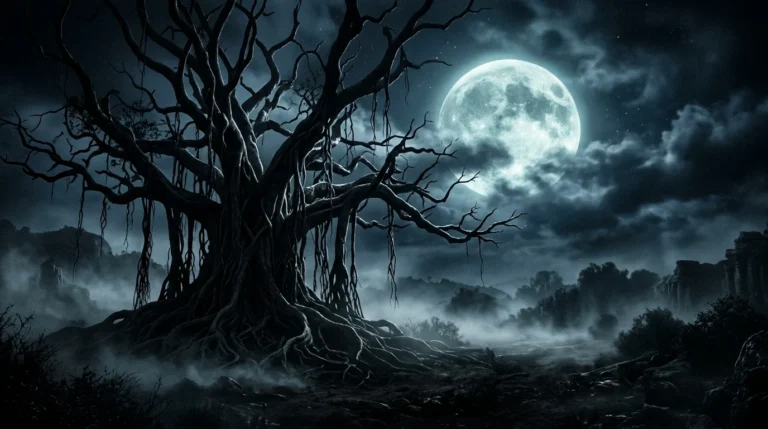
If you grow up in an Indian village, there is one warning every elder gives you before you step out after twilight: never walk alone past the desolate peepal grove, and if you hear someone whispering your name from behind, look down at their feet first. In the vast, shadowy landscape of Indian supernatural folklore, while ghosts like the Brahmarakshasa deal in intellect and the Pishacha thirsts for carrion flesh, the Daayan represents something far more personal and venomous: human malice transformed into a living, immortal curse.
The Daayan in Indian folklore is not merely a fairy-tale witch who stirs cauldrons. She is an elemental figure of terror deeply woven into the rural psyche of Northern and Central India. For centuries, across Uttar Pradesh, Bihar, Rajasthan, and Madhya Pradesh, whispers of women who surrendered their souls to dark deities to master black magic have chilled generations. But where does the myth end, and where does ancient folklore begin?
What Is a Daayan in Indian Folklore?
The word Daayan (also spelled Dayan or Dain) traces its linguistic ancestry back to the Sanskrit word Dakini. In early Tantric and Buddhist traditions, Dakinis were fierce celestial or semi-divine female spirits that guarded sacred esoterica and crossed between mortal and spiritual planes. However, as medieval village traditions evolved and oral folklore diverged from high ritual texts, the perception of the Dakini underwent a terrifying mutation.
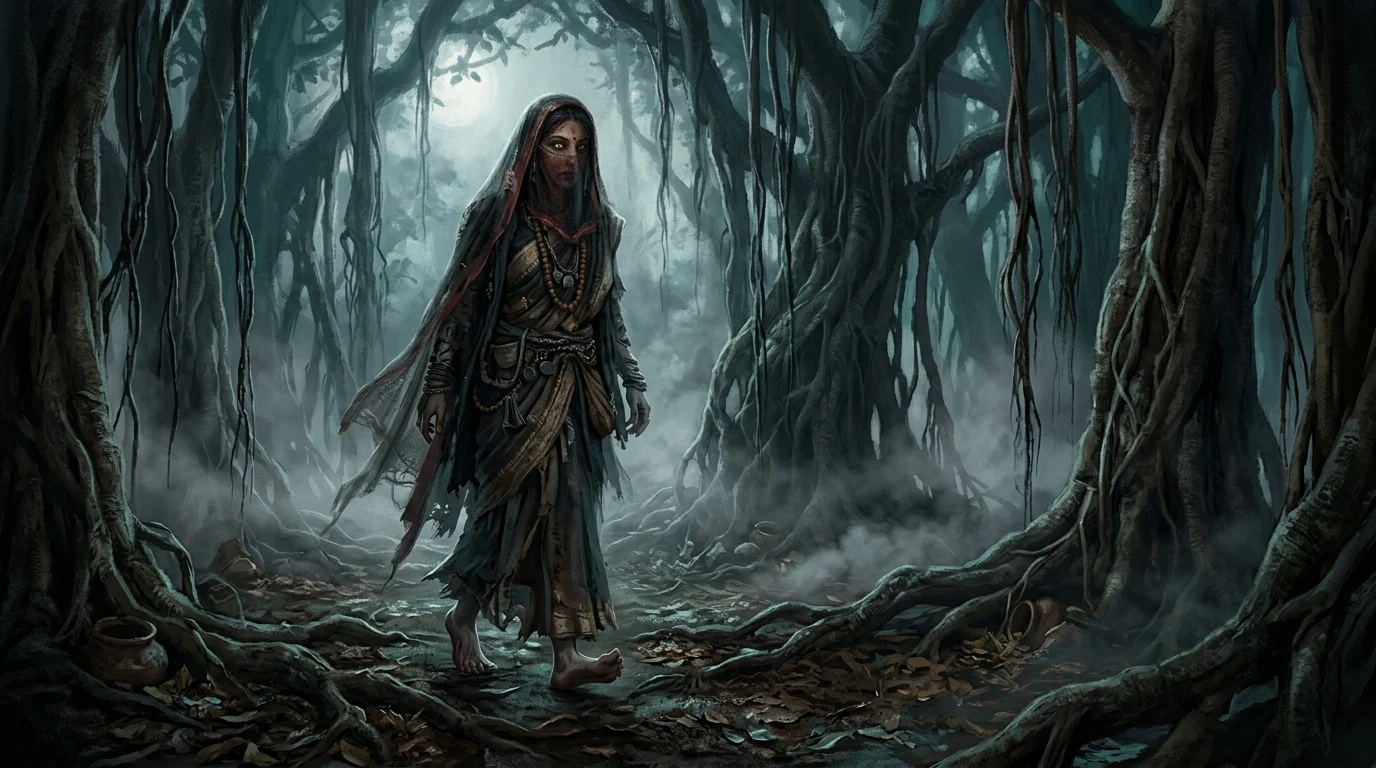
By the medieval era, rural folklore recast her into the Daayan: a living woman who secretly practiced forbidden Tantric arts, sacrificed her familial bonds, and acquired malevolent powers. Unlike a spirit that only haunts after death, a traditional Daayan is often believed to exist as a seemingly ordinary mortal by day, walking among villagers, only shedding her mortal guise when darkness blankets the land.
Anatomy of a Witch: Inverted Feet and the Source of Power
In Indian ghost lore, physical anomalies are the signature signs of the demonic. Much like the Churel, the Daayan shares the unmistakable, eerie physical marker: inverted feet (feet turned completely backward, with heels pointing forward and toes pointing behind).
Folklore dictates that no matter how seamlessly a Daayan disguises herself as a beautiful maiden or a helpless old grandmother, she cannot alter her feet. For this reason, tales recount observant travelers who escaped her grasp simply by glancing at her footprints in the dustseeing toes that pointed in the opposite direction of her movement.
The Secret of the Braid (Choti)
Perhaps the most fascinating aspect of Daayan folklore is where her supernatural vitality resides. Traditional lore holds that a Daayan’s life-force, longevity, and spellbinding power are concentrated entirely in her long, matted braid of hair (Choti). Legends state that:
- ✦If her braid is severed by an exorcist or knowledgeable elder, her magical powers immediately evaporate.
- ✦Without her hair, she rapidly ages into a frail, powerless mortal, suffering the accumulated weight of the centuries she unnaturally stole.
- ✦She will guard her hair with unnatural ferocity, often keeping it bound tightly with protective spells.
Daayan vs. Churel: Understanding the Crucial Difference
People frequently confuse the Daayan with the Churel, but in classical Indian demonology, they are fundamentally different entities:
| Attribute | Daayan (The Living Witch) | Churel (The Restless Spirit) |
|---|---|---|
| Nature of Being | A living human or entity born of dark occult sadhana. | A vengeful ghost (Preta) of a woman who died tragically during childbirth or pregnancy. |
| Primary Motivation | Power, immortality, and draining vital energy (prana). | Vengeance against abusive in-laws or longing for unlived life. |
| Origin | Deliberate study of forbidden black magic and dark deities. | Suffering, untimely death, and lack of proper funeral rites. |
| Physicality | Can walk during daylight as an ordinary villager. | Only manifests at night around crossroads, wells, and banyan trees. |
While a Churel is a victim of tragic circumstance who turns vengeful in death, a Daayan chooses the path of darkness voluntarily. She makes a conscious pact to sacrifice her humanity in exchange for unnatural longevity and terror.
The Dark Powers of the Daayan in Rural Legends
Villagers across rural India attribute unexplainable village tragedies to the presence of a resident Daayan. Stories collected across Rajasthan and Bihar describe abilities that rival the most chilling monsters of global folklore:
- ✦Nazar and Sucking of Prana: A Daayan is feared for her lethal gaze (Buri Nazar). Folklore claims she can cause cattle to stop producing milk, ruin standing crops overnight, or slowly drain the life-force of healthy young infants simply by casting an unbroken stare.
- ✦Shapeshifting (Rup Badalta): Like the seductive Yakshini, she can alter her appearance into a mesmerizing beauty to lure unsuspecting travelers into secluded ravines, or morph into a black cat, an owl, or a feral wolf to stalk prey in the dead of night.
- ✦The Midnight Gathering (Shmashan Mela): On auspicious dark nights like Amavasya (new moon), Daayans are said to convene in abandoned cremation grounds (Shmashan), dancing naked around pyres and offering ritualistic prayers to dark goddesses to renew their unnatural youth.
Frequently Asked Questions About Daayans
What are the classic signs of a Daayan according to Indian folklore?
Traditional village lore lists backward-turned feet, an aversion to mirrors, pupils that never reflect light, an unnatural fear of sacred mustard seeds and iron charms, and an obsession with concealing their hair.
Can a Daayan be defeated or dispelled?
Folklore states that carrying items forged of pure iron, reciting protective stotras like the Hanuman Chalisa or Durga Saptashati, or cutting off her braided hair can neutralize a Daayan’s malicious enchantments.
Is the Daayan legend related to historical witch hunts?
Tragically, yes. In real history, superstitious village trials labeled marginalized, elderly, or widowed women as “Daayans” to usurp their ancestral lands. While the folklore itself is a thrilling, spine-chilling cornerstone of Indian storytelling, it also carries a somber cultural reminder of ancient superstitions.
The Enduring Shadow of Indian Folk Horror
What makes the Daayan in Indian folklore so perpetually terrifying is that she represents the evil hiding in plain sight. She is not a beast that hides in the mountains; she is the quiet figure living at the edge of the village, watching through the lattice window as the sun dips below the horizon.
Whether you hear these tales by a winter bonfire in a remote village or read them in dark fantasy novels, the figure of the Daayan remains one of the most haunting embodiments of darkness in South Asian mythology. Next time you take a nighttime walk down an empty country road, remember the ancient advice: keep an iron key in your pocket, and never forget to glance at the dust behind you.
Explore more dark mysteries and forgotten entities in our deep-dive folklore series, from the haunting tales of haunted Rajasthan to the ancient legends of the Vetala.
FROM THE AUTHOR • HIMANSHU MEGHWAL
Loved This Dark Folklore Investigation?
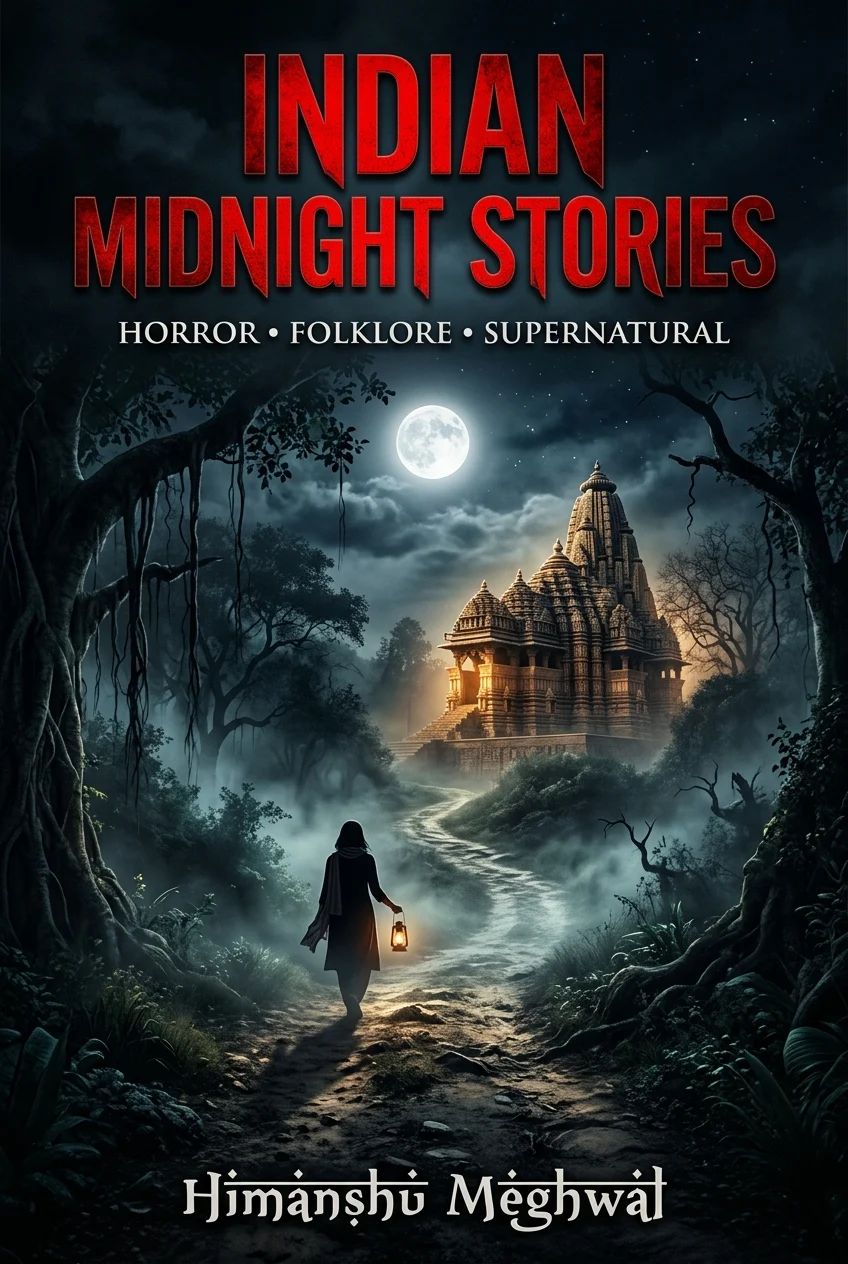
Experience 11 haunting tales of ancient curses, nocturnal entities, and forgotten Indian mysteries in the bestseller Indian Midnight Stories.
FROM THE AUTHOR • HIMANSHU MEGHWAL
Loved This Dark Folklore Investigation?
Experience 11 haunting tales of ancient curses, nocturnal entities, and forgotten Indian mysteries in the bestseller Indian Midnight Stories.