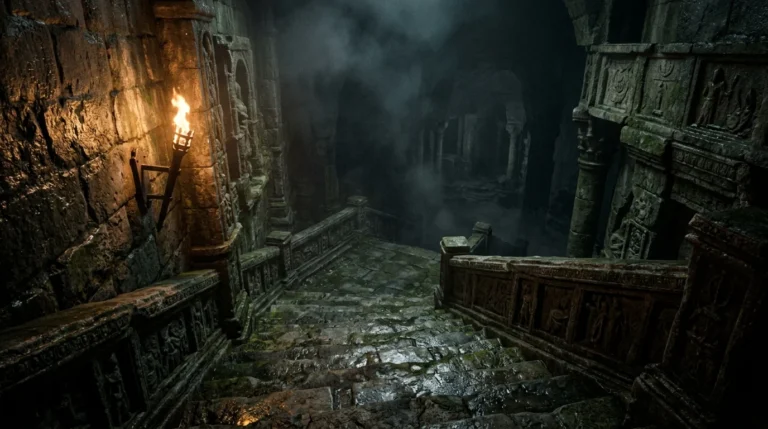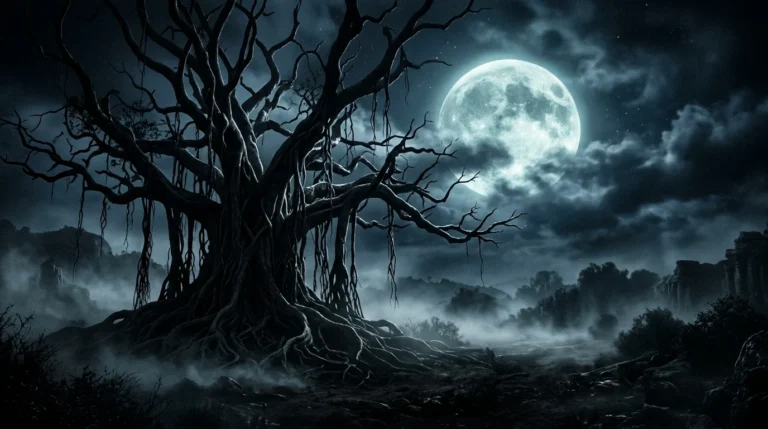
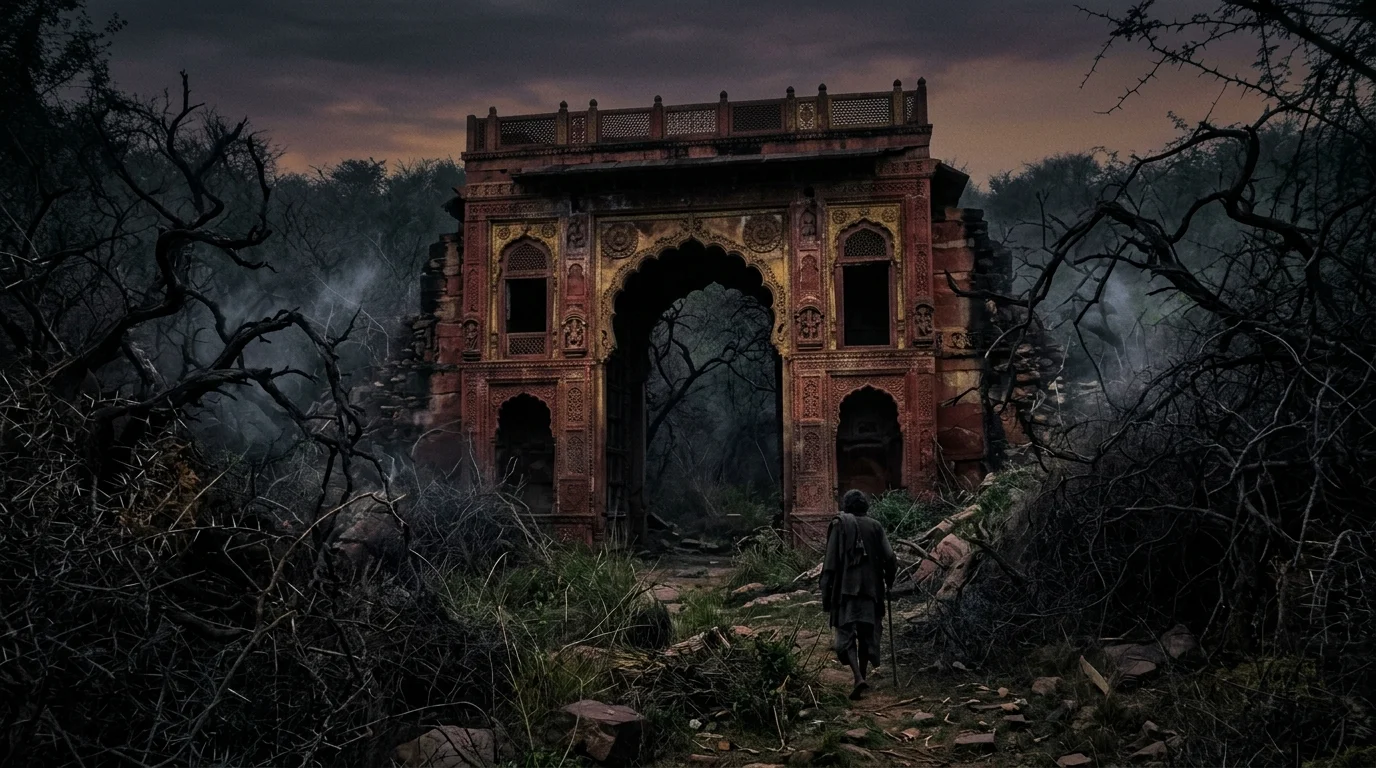
If you travel deep into the scrub forests of the Thar desert across Marwar and Mewar, the elders speak in hush tones about an entity that strikes dread even into seasoned village exorcists. They call him the Babar Bhoot (or Babra Bhoot). Unlike ordinary spirits that wander aimlessly through abandoned corridors like the ghosts of Bhangarh Fort, a Babar Bhoot is an elemental force of sheer, unbridled fury.
In our earlier exploration of Rakt Paas and the Babra Bhoot sadhana, we witnessed how desperate sorcerers attempted to bend this beastly entity to their will. But what is a Babar Bhoot according to ancient oral folklore? Why is it considered so notoriously volatile, and why do desert communities believe that attempting to control one is a guaranteed death sentence?
What Is a Babar Bhoot in Desert Folklore?
In the Rajasthani dialect, the word Babar or Babra evokes wildness, coarseness, untamed feral aggression, and thick, unruly hair (often likened to a wild lion, or Babbar Sher). In occult folklore, a Babar Bhoot is defined as the spirit of a fierce, physically powerful human often a bandit, a ruthless warlord, or an ascetic who lived completely detached in thorny jungle ravines and met a violent, bloody demise.
Because their lives were characterized by brutal wilderness survival and untamable ego, their posthumous form does not dissolve into the subtle astral realms. Instead, their spirit solidifies into an enormous, hulking phantom that claims entire stretches of thorn forest, ravine passes, and dry riverbeds (Nalahs) as its personal hunting territory.
Physical Characteristics: The Monster of the Thorny Ravines
While many Indian apparitions prefer ethereal, shadow-like forms, eyewitness tales from the desert describe the Babar Bhoot with terrifyingly physical realism:
- ✦Massive Stature: It is typically described as standing seven to nine feet tall, with broad, muscular shoulders and a thick, dark pelt of matted body hair that smells of wet earth and copper.
- ✦Glow of Amber Eyes: Unlike human eyes, the gaze of a Babar Bhoot is said to burn like glowing embers in a dying hearth, visible long before the rest of its shadowy silhouette steps into view.
- ✦Earth-Shaking Stride: Desert folk claim that when a Babar Bhoot approaches a midnight encampment, you don’t hear a soft ghostly whisper; you hear the deliberate crunch of acacia thorns and a deep, guttural breathing that causes horses and camels to break their tethers in sheer panic.
The Perilous Ritual: Babra Bhoot Sadhana
Why would any sane practitioner seek out a creature so ferocious? In rural Indian black magic traditions, greed has always driven men to madness.
A bound Babar Bhoot possesses supernatural physical strength. Lore claims that if a tantrik successfully binds one with blood oaths, the spirit can be ordered to carry mountains of buried royal treasure, strike down political rivals across vast distances, or protect a fortress from enemy siege. But the cost is catastrophic.
The ancient Rajasthani occult warning goes: “Babra Bhoot palna aur sher ki sawari karna ek barabar hai.” (Keeping a Babra Bhoot is like riding a hungry tiger.) The moment the tantrik makes the slightest pronunciation error in his protective circle, or hesitates in providing the daily ritual blood offering, the entity turns upon its master with unspeakable brutality, tearing both flesh and soul apart.
How Babar Bhoot Differs from Other Supernatural Entities
| Entity | Habitat | Nature of Threat | Intelligence Level |
|---|---|---|---|
| Babar Bhoot | Desert ravines, dense thorn forests, lonely highway curves. | Overwhelming physical violence, territorial fury, and brute force. | Instinctual, cunning, and stubbornly feral. |
| Brahmarakshasa | Old gurukuls, sacred ruins, ancient peepal groves. | Intellectual torment, psychological possession, corrupting mantras. | Supreme scholarly genius and philosophical mastery. |
| Pishacha | Cremation grounds, charnel houses, filth. | Consuming decaying flesh, draining vitality, spreading madness. | Base, predatory hunger driven by raw appetite. |
Frequently Asked Questions About Babar Bhoot
Can a Babar Bhoot cross into civilized cities?
According to oral folklore, almost never. A Babar Bhoot is inextricably tied to the wild geography of its demise desolate desert dunes, ravines, and thorny acacia woodlands. It despises human settlements and urban noise, which is why encounters almost universally occur on lonely desert highways at night.
How do desert travelers protect themselves from a Babar Bhoot?
Rural traditions advise carrying raw unrefined iron (Loha), burning camphor and neem leaves at midnight encampments, and reciting sacred protective prayers invoking Lord Bhairava or Veer Hanuman, both of whom command dominion over wild forest spirits.
Is the legend still alive in modern Rajasthan?
Very much so. Truck drivers traversing long, empty desert stretches between Jodhpur, Bikaner, and Barmer frequently recount unexplainable mechanical breakdowns accompanied by heavy, bounding steps outside their cabin doors in the pitch-black hours before dawn.
The Primal Dread of the Untamed Wild
The legend of the Babar Bhoot is a chilling reminder of humanity’s ancient vulnerability before the vast, indifferent wilderness. In our comfortable, brightly lit modern homes, we imagine we have conquered the dark. But out on the windswept sands of Western India, where the desert wind howls through thorny ravines, the old people know better.
Some spirits do not want your prayers, your sacred texts, or your redemption. They simply want you to turn around and leave their sacred wilderness in peace.
Discover more authentic Indian folklore, eerie desert mysteries, and supernatural legends in our curated collections of Indian village horror tales and ancient witchcraft folklore.
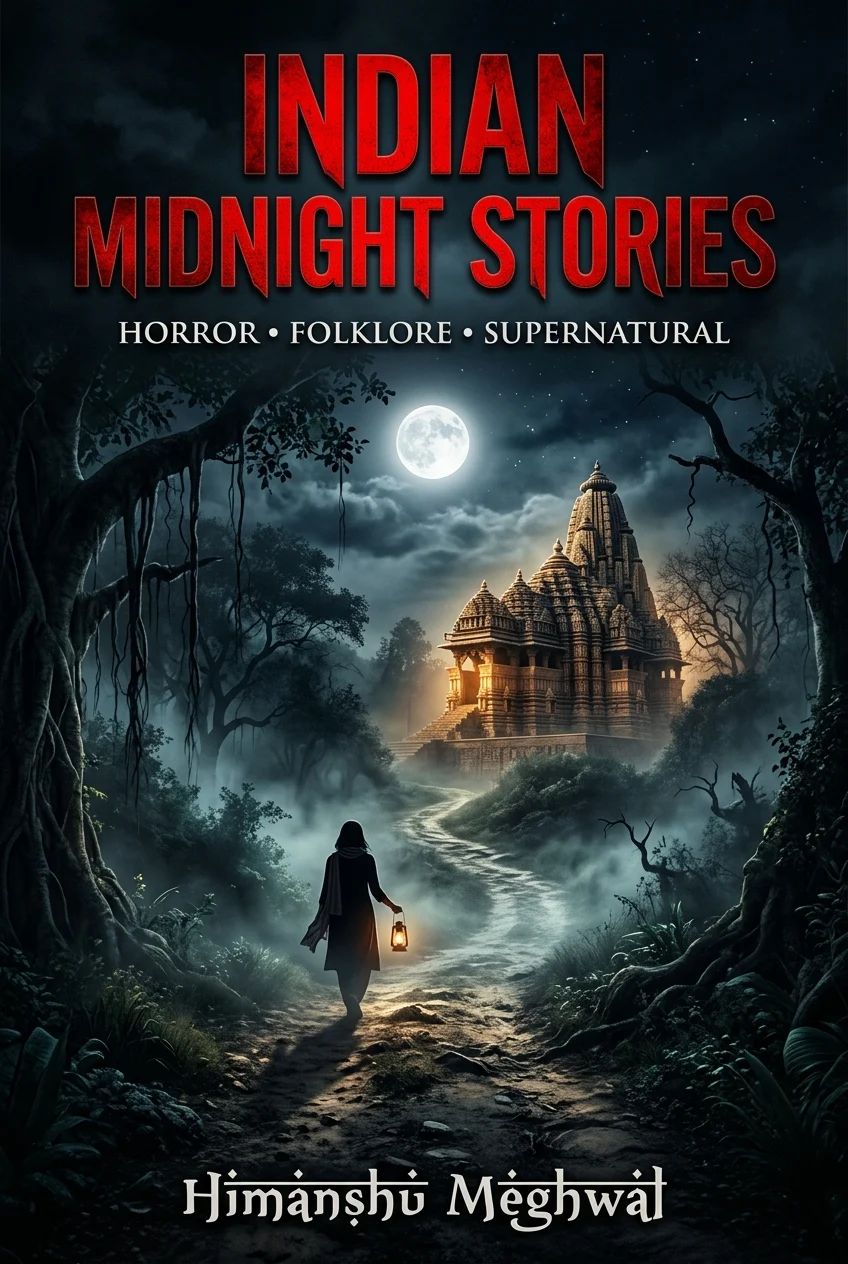
FROM THE AUTHOR • HIMANSHU MEGHWAL
Loved This Dark Folklore Investigation?
Experience 11 haunting tales of ancient curses, nocturnal entities, and forgotten Indian mysteries in the bestseller Indian Midnight Stories.