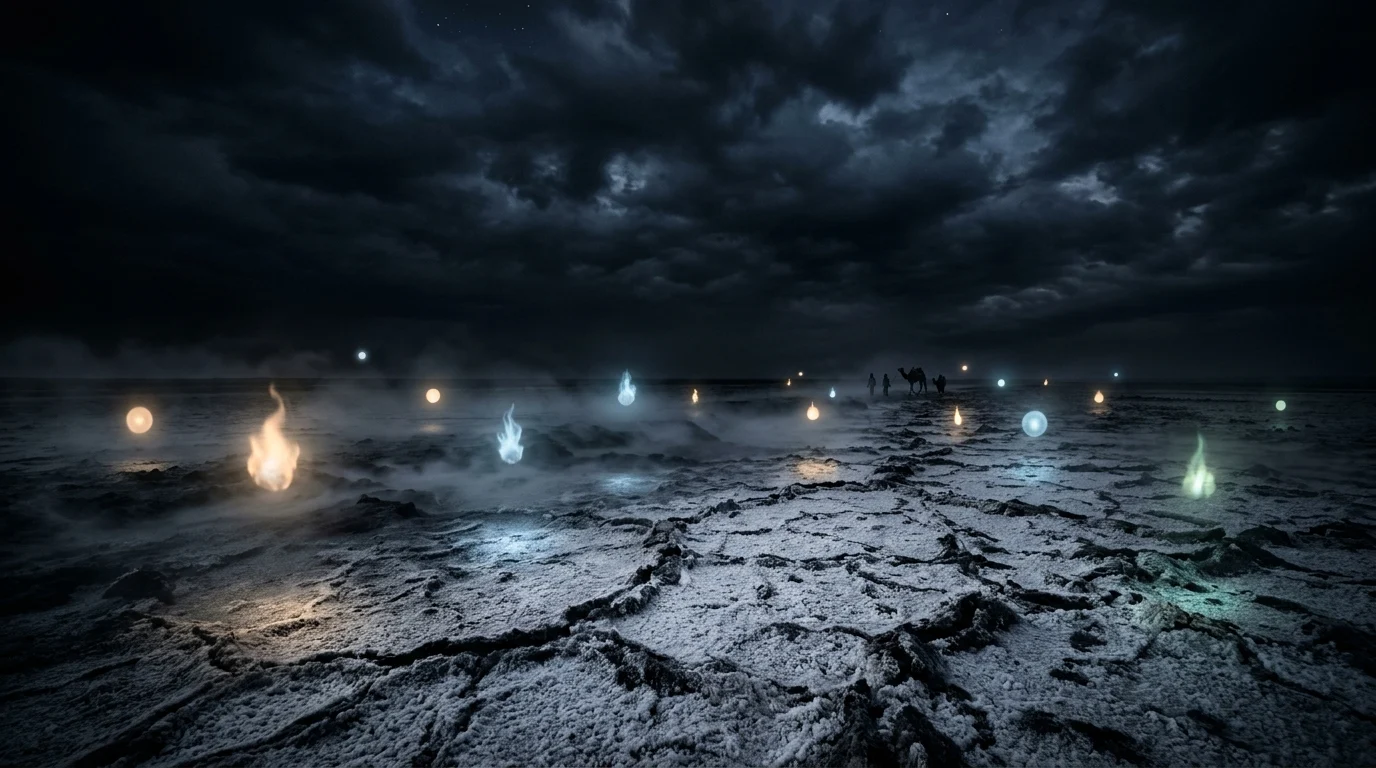
Imagine standing on the salt flats of the Great Rann of Kutch at two o’clock in the morning. There is no moon. The horizon stretches out endlessly in complete, suffocating blackness. The silence is so total you can hear the blood pulsing behind your temples. And then, out on the barren mud flats where no human road exists, a ball of pale yellow light sparks into existence. It hovers for a second, pulses with a dull red glow, and suddenly darts horizontally across the salt crust at the speed of a racing arrow.
The local Maldhari pastoralists and Kutch border guards do not run toward it. In fact, they look away and urge you to stay within your vehicle. They call this phenomenon the Chir Batti (literally: Ghost Light). For generations across the Banni grasslands and the Kutch marshes, it has stood as one of the most compelling, documented, and eerie unexplained mysteries in Indian paranormal lore.
What Is the Chir Batti Phenomenon?
In the local Kutchi-Sindhi dialect, Chir translates to ghost or phantom spirit, and Batti means light or lantern. While global folklore is familiar with the concept of the Will-o’-the-Wisp in European peat bogs or the Min Min lights of the Australian outback, the Chir Batti of Kutch exhibits behavior so deliberate and intelligent that it defies simple explanation.
Documented since antiquity and frequently observed by modern Border Security Force (BSF) personnel stationed along the desolate Indo-Pak marsh border, these lights appear as spherical fireballs ranging in size from a fist to a large beach ball. They generally float two to ten feet above the marshy ground, shifting in color from bright pearly white to neon blue, blood red, and amber.
Eyewitness Accounts: The Game of Hide-and-Seek
What sets the Chir Batti apart from ordinary marsh methane ignitions is its uncanny, playful, and sometimes lethal interaction with human observers:
- ✦Mimicry and Chase: If an observer stands still, the light often remains stationary, pulsing rhythmically like a glowing breath. But if a traveler begins walking toward it, the light instantly retreats into the dark. Conversely, if you run in the opposite direction, eyewitnesses report the light accelerating behind you, keeping a steady, unnerving distance.
- ✦The Trap of the Salt Quicksand: Maldhari elders warn that following the Chir Batti is suicidal. The lights frequently hover over treacherous quicksand zones (daldal) and concealed saline pits where an unwary nighttime traveler can sink and vanish without a trace.
- ✦Splitting and Merging: Observers from the BSF and wildlife researchers in the Banni grasslands have documented single orbs of light suddenly splitting into two or three distinct spheres, dancing around each other in mid-air, and then snapping back together into a single blinding flash before extinguishing completely.
Folklore and Legends of the Maldhari Tribes
Before modern investigators arrived with scientific equipment, the pastoral communities who have grazed cattle in the Banni grasslands for a thousand years passed down their own ancient explanations for the phenomenon.
1. The Lanterns of the Wandering Fakirs
One pervasive legend tells of Sufi dervishes and wandering saints who traversed the ancient salt trails between Sindh and Gujarat centuries ago. Caught in unexpected sandstorms or swallowed by seasonal floods, these holy travelers perished in the wilderness. Folklore believes their lingering spiritual energy continues to wander the marshes, holding spectral lanterns (Chirag) searching for the lost caravan paths.
2. Restless Warriors of the Border Skirmishes
Another desert tradition attributes the lights to fallen soldiers from medieval Rajput and Sultanate border clashes whose bodies were never given proper cremation or burial rites. In Indian folklore, souls denied proper last rites frequently wander as elemental lights, unable to ascend to the ancestral realms (Pitri Loka) or reincarnate.
Scientific Hypotheses: Can Science Explain the Chir Batti?
Geologists, physicists, and environmentalists have put forward several rational theories to explain the lights of Kutch:
- ✦Spontaneous Marsh Gas Combustion: Decaying organic matter beneath the saline marshes generates methane (CH4), phosphine (PH3), and diphosphane (P2H4). When diphosphane comes into contact with air, it spontaneously combusts at room temperature, creating brief, flickering cold flames.
- ✦Piezoelectric Discharge: The Rann of Kutch sits on an active tectonic fault line (responsible for the catastrophic 1819 and 2001 earthquakes). Tectonic pressure on quartz-bearing crystalline rocks can generate intense electric charges that travel to the surface, ionizing atmospheric gases into glowing plasma balls.
- ✦Ball Lightning: In certain atmospheric conditions over vast flat desert plains, plasma vortices can form, displaying erratic, drifting movements before collapsing.
Yet, while marsh gas explains brief flickering glows, it fails to explain how these spheres maintain structural coherence for over an hour, change color dynamically, and navigate horizontal winds without being blown out. For the local desert folk, science merely describes the mechanism; it does not explain the presence behind it.
Safety Tips for Travelers Visiting the Banni & Kutch at Night
- ✦Never Wander the Salt Flats After Sunset Without a Local Guide: The white desert is deceptively featureless. Without visual landmarks, disorientation sets in within minutes.
- ✦Do Not Chase Unknown Lights: If you spot a hovering light in the distance, resist the urge to walk toward it. Quicksand and tidal marsh trenches surround the deep flats.
- ✦Respect Local Tribal Customs: The Maldharis have lived harmoniously with the mysteries of the Rann for centuries. When they tell you that certain scrublands are off-limits at midnight, heed their advice.
The Eternal Romance of the Dark Horizon
The Chir Batti remains one of the crowning jewels of Indian supernatural lore precisely because it sits on the knife-edge between natural wonder and spectral mystery. Much like the eerie abandoned streets of Kuldhara village or the cursed ruins of Bhangarh Fort, it reminds us that our earth still holds secrets that refuse to fit into neat laboratory boxes.
If you ever find yourself gazing out across the endless salt desert of Kutch under a velvet sky, keep your eyes on the distant horizon. And if a small, amber spark floats up into the stillness and blinks at you, do not call out. Just watch, listen, and remember how ancient this land truly is.
Explore more unexplained phenomena and ancient Indian legends in our comprehensive collection of real Indian horror stories and legendary mythological creatures.
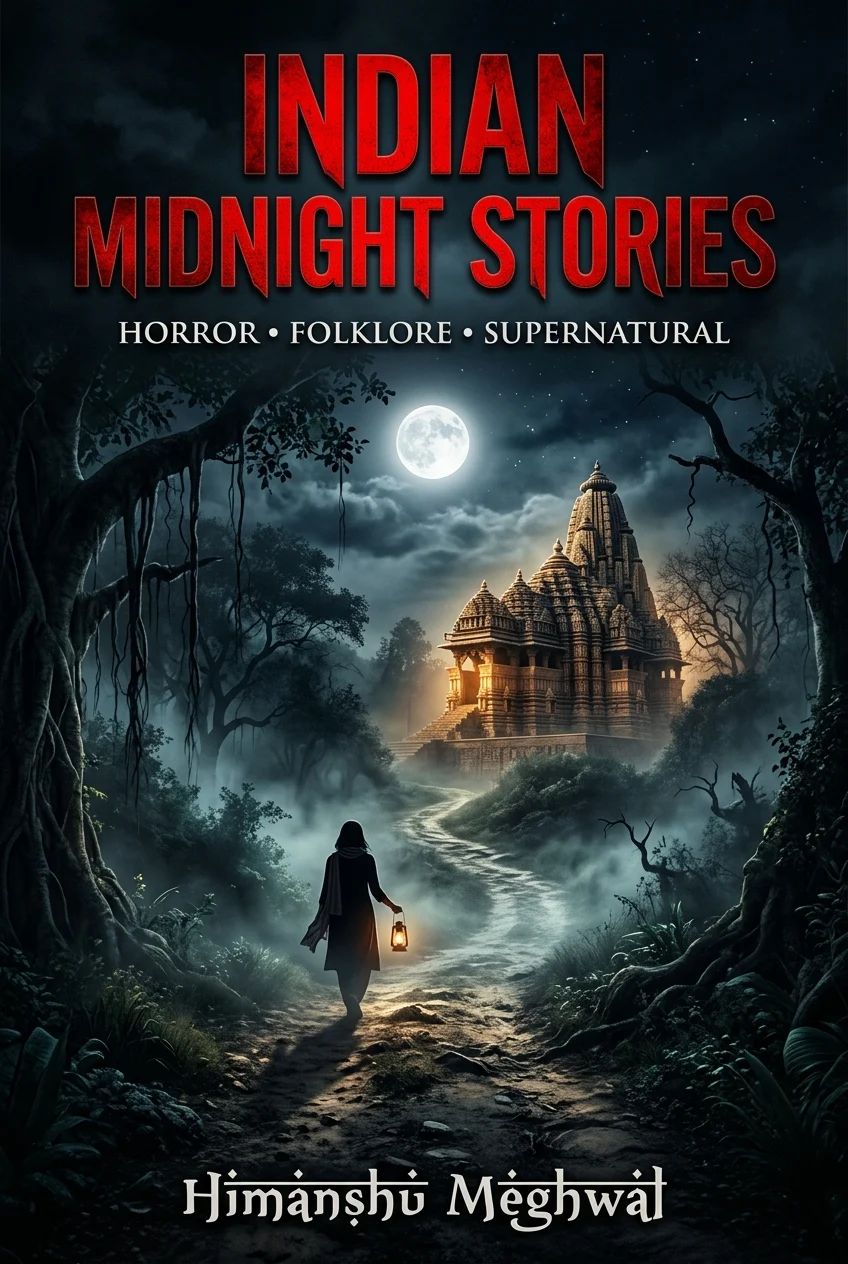
FROM THE AUTHOR • HIMANSHU MEGHWAL
Loved This Dark Folklore Investigation?
Experience 11 haunting tales of ancient curses, nocturnal entities, and forgotten Indian mysteries in the bestseller Indian Midnight Stories.