When most people think of gods, they picture radiant deities seated in golden celestial palaces, surrounded by fragrant blossoms, celestial dancers, and seraphic songs. But Indian mythology has never flinched from the terrifying realities of existence. High atop the freezing peaks or down in the smoldering ash of the cremation ground sits a deity who rejects every convention of heavenly luxury: Lord Shiva, adored by sages, feared by demons, and worshipped by the dead as Bhootnath the Lord of Ghosts.
In our previous explorations of Aghori sadhana and the cremation ground and the intellect of the Brahmarakshasa, we touched upon the dark peripheries of Hindu cosmology. Yet behind every wandering spirit, every hungry ghoul, and every restless shadow stands a solitary divine guardian who grants them shelter. Why is the supreme yogi also the master of phantoms?
Etymology: What Does ‘Bhootnath’ Truly Mean?
The title Bhootnath (or Bhuteshwara) is composed of two Sanskrit words: Bhoota (or Bhuta) and Natha (Lord, Protector, or Master). While modern Hindi colloquially translates Bhoot exclusively as “ghost,” the classical Sanskrit root Bhu holds a much vaster philosophical meaning:
- ✦That Which Has Come into Existence: Every created being in physical reality from the tiniest insect to the greatest celestial titan is technically a Bhoota.
- ✦The Five Elemental Foundations (Pancha Mahabhutas): Earth, Water, Fire, Air, and Space. As Bhootnath, Shiva commands the atomic building blocks of the material universe.
- ✦The Departed and Untamed Souls (Pretas and Ganas): Those entities whose physical bodies have dissolved into ash, leaving raw consciousness lingering between worlds.
Thus, Bhootnath is not just a king of graveyards; he is the sovereign ruler over every being that has ever taken breath, shed flesh, or wandered in spiritual exile.
The Retinue of the Damned: The Shiva Ganas
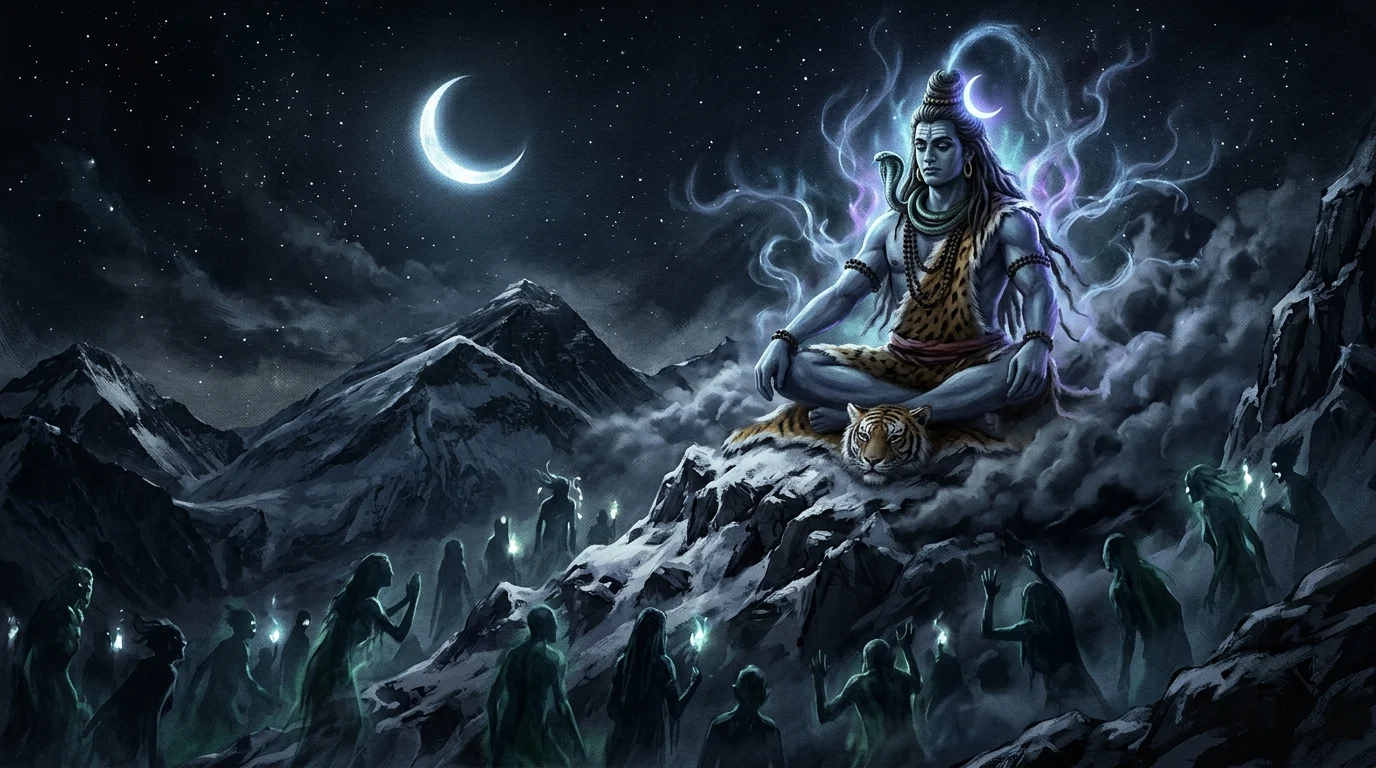
In traditional temple murals and Puranic narratives such as the Shiva Purana, when Shiva embarks on his midnight wanderings, he is not accompanied by gilded angels. His retinue, known as the Pramatha Ganas, is a grotesque and wondrous carnival of the outcast:
- ✦Vetalas and Pisachas: Carnivorous ghouls and corpse-dwelling tricksters who find redemption through divine devotion.
- ✦Dakinis and Shakinis: Fierce, nocturnal spirits carrying tridents and burning braziers.
- ✦Kumbhandas and Guhyakas: Misshapen, dwarfish earth-spirits and cavern dwellers ignored by polite society.
- ✦Unquiet Spirits (Pretas): Souls that met sudden, violent deaths or died without family to perform funeral rites.
When Shiva married Parvati, celestial beings were horrified to see the wedding procession arrive led by screaming ghouls, skeletal dancers, and horned phantoms. Yet Shiva smiled serenely. To the ascetic Mahadeva, the outcast and the deformed are just as beloved as the gods of Swarga.
Why Do Ghosts Seek Refuge in Shiva?
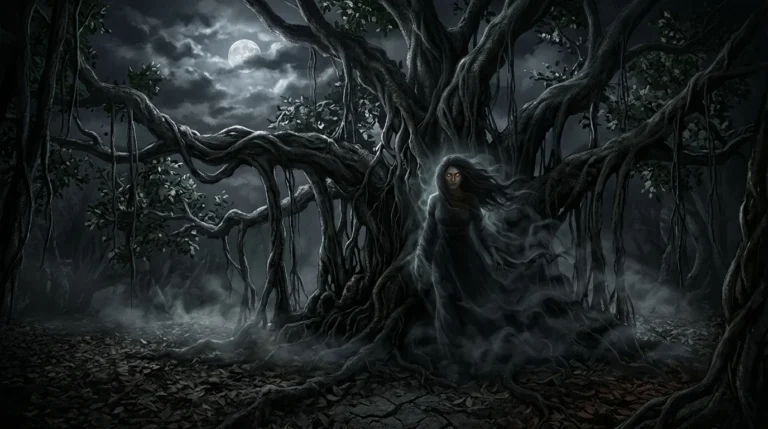
In the intricate metaphysics of Hindu karma, ordinary souls pass through the court of Yama (the god of justice) or move directly into another womb. But what happens to the anomalous souls those bound by extreme trauma, tragic murder, or dark occult curses like the Daayan or Babar Bhoot?
Orthodox temples often bar restless entities. Consecrated holy thresholds actively repel tormented preta energies. Where does a spirit go when heaven refuses it and hell has not yet opened its gates? It goes to Bhootnath.
Shiva sits in the Smashan (cremation ground) precisely because it is the zero-point of judgment. He does not ask for gold or elaborate Sanskrit recitations. He welcomes the tortured spirit, ties it into his retinue, and grants it shelter under his divine trident (Trishula) until its volatile karmic debts are slowly dissolved into peaceful ash.
The Roar of Bhairava: Shiva’s Terrible Form
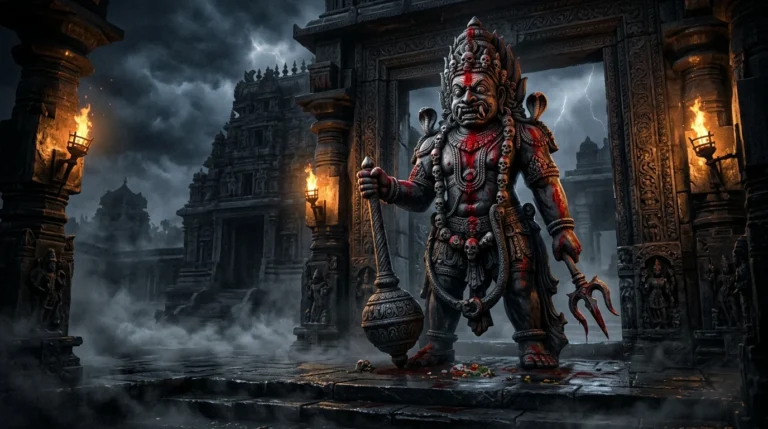
When the phantoms grow unruly or malevolent spirits terrorize the living, Bhootnath assumes his most ferocious manifestation: Kalabhairava the fierce, midnight guardian of Time. Riding a black dog and bearing a severed skull, Bhairava serves as the supreme cosmic magistrate over all supernatural beings.
In sacred cities like Varanasi and Ujjain, traditional tantriks and local residents never begin a supernatural cleansing or protective ritual without first seeking permission from Kalabhairava, the Kotwal (Police Chief) of the spirit world.
Frequently Asked Questions About Bhootnath
Is worshipping Shiva as Bhootnath dangerous for normal householders?
Not at all. While the intense cremation rites of Aghoris are meant for initiated ascetics, worshipping Shiva as Bhootnath or Bhuteshwara is traditionally recommended for those suffering from nightmares, unexplained anxiety, severe grief, or fear of death. He is called Ashutosh the one who is easily pleased by simple sincerity.
Where are the famous Bhootnath / Bhuteshwar temples in India?
Renowned historic temples dedicated to this manifestation include the ancient Bhootnath Temple in Mandi, Himachal Pradesh (dating back to 1527 CE), the Bhuteshwar Mahadev Temple in Mathura, and the atmospheric cremation shrines along the riverbanks of Kashi and Pashupatinath in Nepal.
The Compassion in the Horror
The ultimate paradox of Bhootnath in Hindu mythology is that the most terrifying form of God is also the most deeply compassionate. It is easy to love the beautiful, the radiant, and the pure. But only a truly infinite divine consciousness can embrace the monstrous, the rotting, the discarded, and the terrified.
Bhootnath reminds us that in the grand cosmic cycle, light and darkness are two hands of the same reality. When your own life feels shrouded in shadows and forgotten ghosts, look toward the burning ground. The Lord of Phantoms is waiting, not to harm, but to hold the dark until dawn returns.
Continue your journey into the darker corridors of myth and legend with our deep dives on the legend of the Vetala, sacred serpent deities, and classic Indian ghost stories.
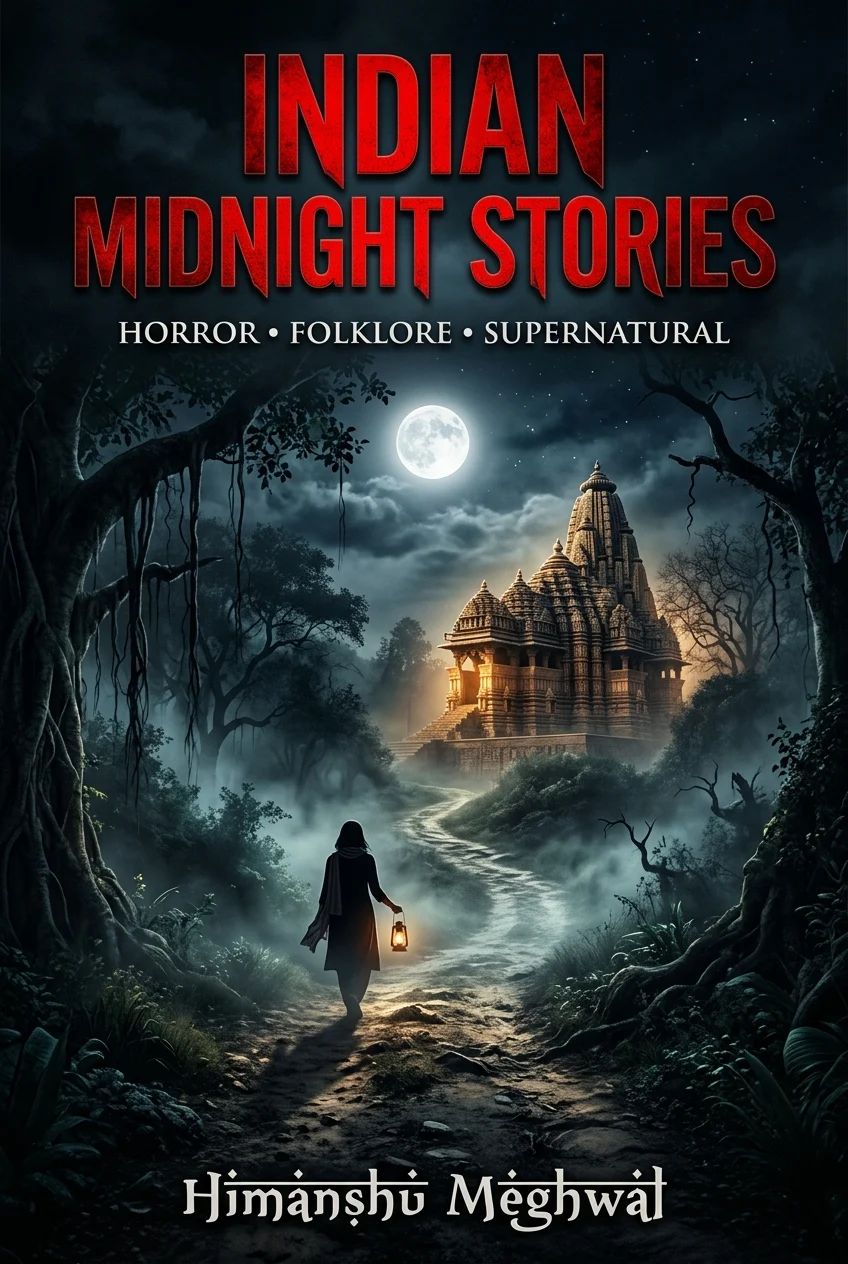
FROM THE AUTHOR • HIMANSHU MEGHWAL
Loved This Dark Folklore Investigation?
Experience 11 haunting tales of ancient curses, nocturnal entities, and forgotten Indian mysteries in the bestseller Indian Midnight Stories.