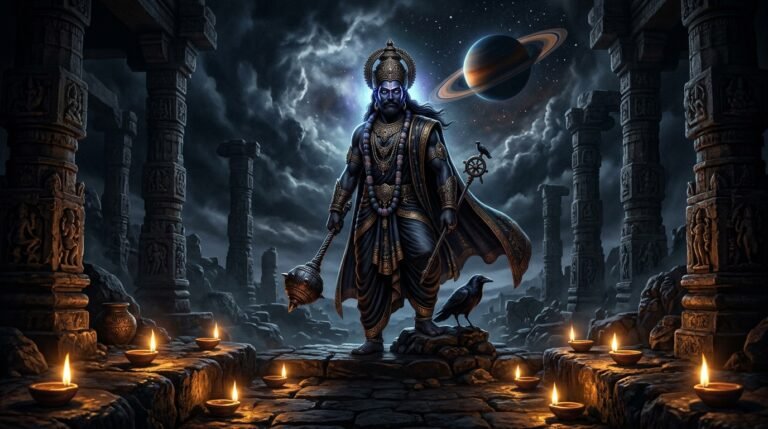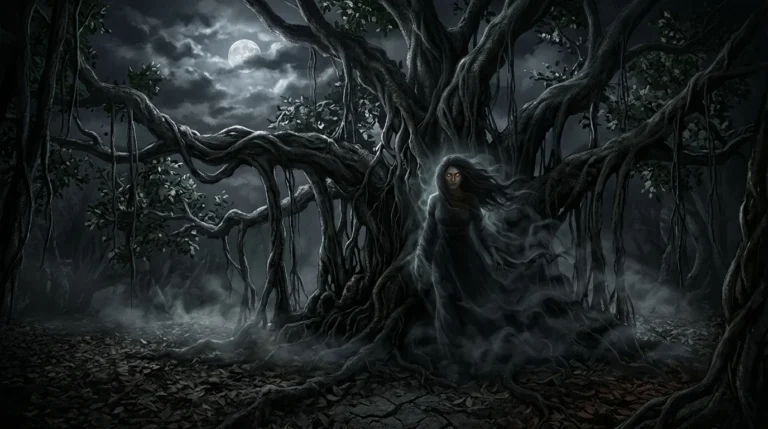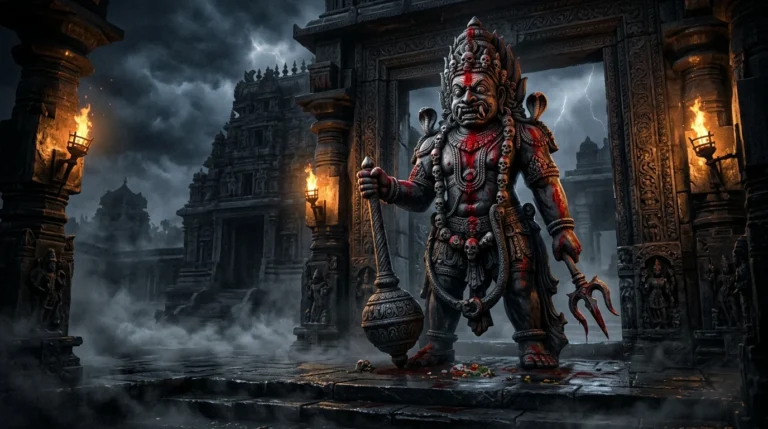

When modern people hear the word Ayurveda, they envision herbal detox teas, warm sesame oil massages, and dietary charts balancing Vata, Pitta, and Kapha. But pick up the foundational Sanskrit compendiums the Charaka Samhita, the Sushruta Samhita, and the Ashtanga Hridaya and you will find a complete, rigorously documented branch of medicine that sounds more like paranormal investigations than natural therapy: Bhoot Vidya (often termed Graha Chikitsa).
For millennia, classical Indian physicians recognized that some illnesses do not originate from physical pathogens, bad food, or biological decay. There were disorders that struck suddenly, twisted human behavior overnight, gave frail bodies the strength of wild beasts, and spoke in strange, forgotten dialects. To treat these anomalies, ancient Indian science formulated Bhoot Vidya: the clinical study of subtle entities, psychological possession, and unseen forces.
The Eighth Branch of Classical Medicine: Ashtanga Ayurveda
Traditional Ayurveda is divided into eight clinical specialties (Ashtanga):
- ✦Kaya Chikitsa: Internal medicine and general bodily disorders.
- ✦Shalya Tantra: Surgery and trauma care.
- ✦Shalakya Tantra: ENT and ophthalmology (diseases above the clavicle).
- ✦Kaumarabhritya: Pediatrics and obstetrics.
- ✦Agada Tantra: Toxicology and antivenom pharmacology.
- ✦Rasayana: Geriatrics, rejuvenation, and longevity.
- ✦Vajikarana: Reproductive medicine and vitality.
- ✦Bhoot Vidya (Graha Chikitsa): Psychiatry, psycho-spiritual affliction, and the influence of unseen entities.
That a culture famous for surgical precision (Sushruta was performing rhinoplasty and cataract surgeries thousands of years ago) gave equal scientific standing to spiritual demonology proves how systematically ancient India approached the frontiers of the human mind.
Grahas: The Unseen Vectors of Affliction
In Sanskrit, the word Graha derives from the root Grah, meaning “to seize, grip, or possess.” In classical Bhoot Vidya texts, a Graha is not a mythological movie monster; it is defined as an invisible, microscopic, or subtle consciousness capable of penetrating a person’s weakened psychic field (Manovaha Srotas).
The Sushruta Samhita (Uttara Tantra) meticulously categorizes the distinct behavioral symptoms exhibited when different supernatural archetypes seize a human mind:
| Invading Entity (Graha) | Behavioral Symptoms Documented in Ayurveda | Psychological Parallel |
|---|---|---|
| Deva Graha (Divine / Celestial) | Patient becomes extraordinarily cleanly, speaks poetically, seeks solitude, refuses meat, and emits a sweet floral scent. | Religious ecstasy, hyper-religiosity, manic clarity. |
| Gandharva Graha (Celestial Artist) | Patient constantly dances, sings, dresses in flamboyant colors, adorns themselves with perfumes, and wanders riverbanks. | Histrionic state, manic expressive dissociation. |
| Yakshini / Yaksha Graha | Patient’s eyes turn bloodshot, speech becomes rapid and secretive, develops obsessive hoarding tendencies and seductive gestures. | Bipolar mania, obsessive-compulsive fixation. |
| Pishacha Graha | Patient tears off clothes, roams in filth, eats raw decaying food, screams in harsh discordant voices, and exhibits unnatural physical cruelty. | Severe acute psychosis, clinical lycanthropy, catatonia. |
Why Does a Person Become Vulnerable?
The physician Charaka was remarkably clear: unseen forces cannot enter a vessel that is mentally and morally impenetrable. Bhoot Vidya outlines specific vulnerabilities that rupture the psychological barrier (Ojas):
- ✦Prajnaparadha (Intellectual Blasphemy): Acting against one’s own inner wisdom guilt, deceit, and prolonged hypocrisy weaken the soul’s immune system.
- ✦Severe Traumatic Shock: Sudden terror, acute bereavement, or profound exhaustion creates a fracture in consciousness through which predatory entities enter.
- ✦Violating Spatial Sanctuaries: Desecrating sacred groves, disturbing crossroads at unholy hours, or urinating near ancient trees where beings like the Brahmarakshasa or Churel dwell.
Treatment Protocols: Ancient Clinical Exorcism
Bhoot Vidya treatment was far more sophisticated than simply beating a patient with neem branches. Classical physicians employed a multi-layered therapeutic regimen known as Daiva-Vyapasraya Chikitsa (Spiritual / Non-Physical Therapy):
1. Dhoopana (Medicinal & Esoteric Fumigation)
Physicians burned specialized combinations of dried herbs and animal substances designed to assault the sensory system of malevolent entities. Common ingredients included guggul resin, white mustard seeds (Siddhartha), dried neem leaves, asafoetida, cat hairs, and shed snake skins. Modern pharmacology recognizes that several of these resins contain powerful neuro-active compounds that alter brainwave states.
2. Mantra and Acoustic Frequency
Drawing from the Atharvaveda, doctors chanted specific phonetic frequencies designed to stabilize cognitive fluctuations and compel parasitic astral energies to release their hold on the patient’s nervous pathways.
3. Mani and Aushadha (Gemstone & Amulet Anchoring)
Once the entity was driven out, the patient was fitted with consecrated iron bands, gold talismans, or specific herbal roots (such as Vacha and Brahmi) bound around the wrist or neck to seal the psychic breach and rebuild vital Ojas.
Frequently Asked Questions About Bhoot Vidya
Is Bhoot Vidya still taught in Ayurvedic universities today?
Yes, but with modern adaptations. Major institutions such as Banaras Hindu University (BHU) in Varanasi offer post-graduate studies and clinical programs in Bhoot Vidya, largely focused on integrating ancient psychosomatic understanding with modern psychiatric and counseling therapies.
Is Bhoot Vidya just ancient schizophrenia and psychosis?
To a modern materialist, yes: much of what ancient doctors described as Graha possession corresponds to schizophrenia, bipolar mania, and dissociative identity disorder. However, traditional scholars argue that ancient observers were detecting genuine subtle metaphysical dimensions that modern neuro-chemical models have flattened into mere biological glitches.
The Bridge Between Medicine and Mystery
The brilliance of Bhoot Vidya lies in its refusal to divide human suffering into simplistic silos. It recognized that the human being is simultaneously flesh, mind, and spirit. When darkness invades, treating the body alone is never enough.
Long before Western psychology realized that words, rituals, and environments alter brain chemistry, the ancient rishis understood that healing the mind requires engaging with the mysteries that dwell in its deepest, unmapped shadows.
Continue unearthing the esoteric sciences of ancient India with our guides on dark tantric rituals, sacred serpent symbolism, and lesser-known creatures from Indian lore.
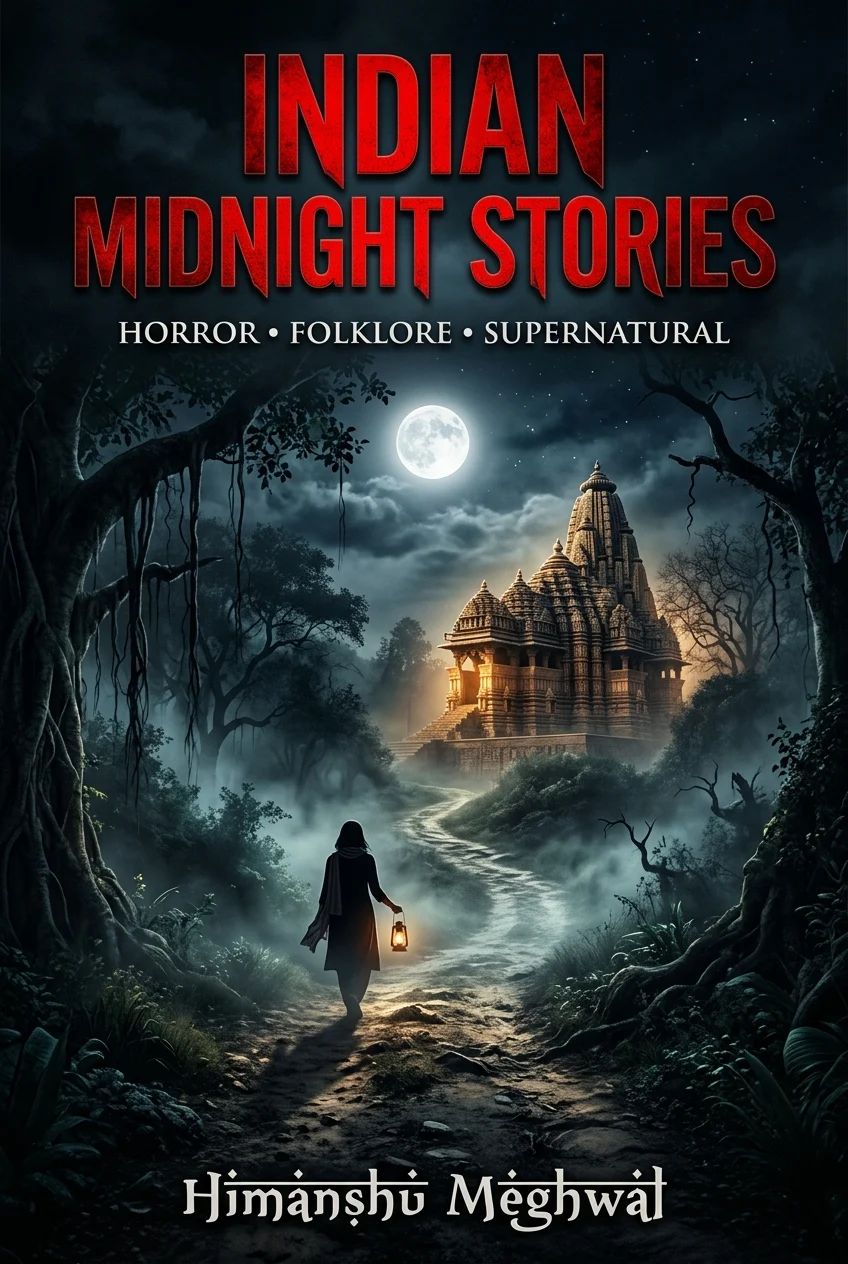
FROM THE AUTHOR • HIMANSHU MEGHWAL
Loved This Dark Folklore Investigation?
Experience 11 haunting tales of ancient curses, nocturnal entities, and forgotten Indian mysteries in the bestseller Indian Midnight Stories.